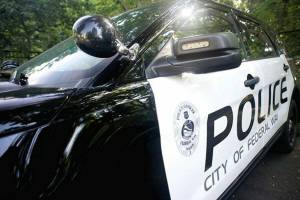
FWPD expects new drone to enhance police services
Published 8:00 am Saturday, January 17, 2026
The Federal Way City Council voted unanimously to approve the implementation of a Drone as First Responder (DFR) program for the Federal Way Police Department at the Jan. 6 council meeting.
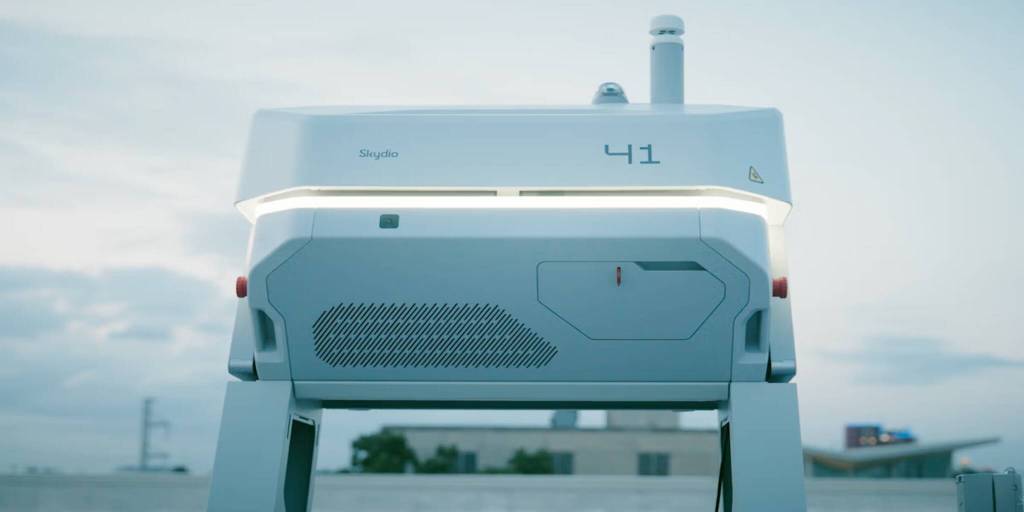
DFR programs involve remotely deploying a drone to an incident in order to provide real-time information from the scene.
Cmdr. Michael Coffey shared in a presentation to the council that the Federal Way Police Department plans to use the drone for:
• Responding to high-priority incidents to provide information and help with the coordination of resources
• Drug investigations and interdiction
• Security and response at large-scale community events
• Overwatch on the execution of search warrants
• Accident response and resource allocation
• Everyday incident overwatch on calls for service, like in-progress burglaries, setting perimeters and search and rescue operations.
• The drone could also be deployed for simply “investigating suspicious activity.”
In the FWPD’s assessment, the drone could help minimize police response times, be used to assess if a response is actually needed and reallocate patrol units if they are not necessary.
The police department evaluated three vendors and found that vendor Skydio is their preferred option. The City of Federal Way already has a contract with Axon for their body cameras and digital evidence management, and Axon also has a partnership with Skydio, meaning these programs would all be integrated.
DFR programs and drone use in law enforcement agencies in general are gaining popularity, especially after requirements by the Federal Aviation Administration (FAA) changed in May 2025.
Over 40 law enforcement agencies in the state utilize drones of some kind.
Federal Way’s proposed drone dock locations will be at City Hall and at the Federal Way Performing Arts and Event Center.
The drone will cost taxpayers approximately $100,000 every year for the five-year term, at which point the cost could increase.
This program will be paid for using state seizure funds for the first year, which are also used to fund vehicles, equipment and more for the special investigations unit and narcotics detectives, according to FWPD Chief Andy Hwang at the council meeting.
After the first year, the rest of the money for the drone will most likely come out of the city’s general fund or the police budget itself.
“Obviously we believe that this has a significant benefit to public safety and the police department,” Hwang said, adding that upon approval of the drone purchase, “we would put it as a priority in our budgeting.”
Federal Way Police Department has used drones in the past, starting in 2018. The drones were shelved after FAA requirements changed in 2023, according to Cmdr. Kyle Buchanan.
The new DFR contract includes the upgrading and repairing of those drones to be usable again by the department.
Public comment
Public commenters at the council meeting expressed both concerns and support for the drone program, as well as the controversial Flock camera surveillance systems.
Federal Way resident Nathan Orth spoke to the fact that there is no legislation yet to cover public records requests for either drone camera footage or Flock cameras like there is now for body camera footage.
The ambiguity of the state laws around this became clear after a recent ruling in Sedro-Woolley on the release of Flock camera images. Body-worn camera footage includes exemptions from being shared as part of the public record for things like active investigations, names and identifying details of victims and witnesses and more.
Orth noted that “when body-worn cameras were introduced, a large and detailed section was added to the law to ensure the expanded scope of surveillance was explicitly addressed and restrained.”
As a few more examples, body-worn camera footage can be withheld or redacted if it shows medical treatment or health information inside of homes, minors, intimate images, dead bodies, domestic violence or sexual assault victims, shelters and domestic violence program locations.
Buchanan for the FWPD told the Mirror that he expects drone footage would probably be treated like body-worn cameras under the current law. The current public records law does not mention drones or automatic license plate reader (ALPR) cameras like those produced by Flock.
Federal Way resident Anna Patrick shared her support for the drone program, saying, “I think it’s great that we add another tool to our police department,” and that the city could “add some guardrails that are similar to body cameras.”
Federal Way resident Colin Caley questioned how useful drones actually are to increase community safety and shared some thoughts on the possible negative impacts of using drones.
“Our incredibly diverse population where over a hundred languages are spoken in our public schools deserves more than drones,” Caley said. “Many come from war-torn communities and the last thing they need to see or hear is another drone buzzing around their communities. No one deserves to be traumatized.”
Caley also raised concerns about Flock cameras, noting that when it was uncovered how easily the data can be accessed by ICE and other actors outside of their intended data holders.
“I again demand that we end our contract with Flock. If we truly love this community, we want to make sure that we care about all of our neighbors and not just the police department,” Caley said.