St. Francis Hospital recognized for care of heart disease and stroke
Published 7:30 am Sunday, August 31, 2025
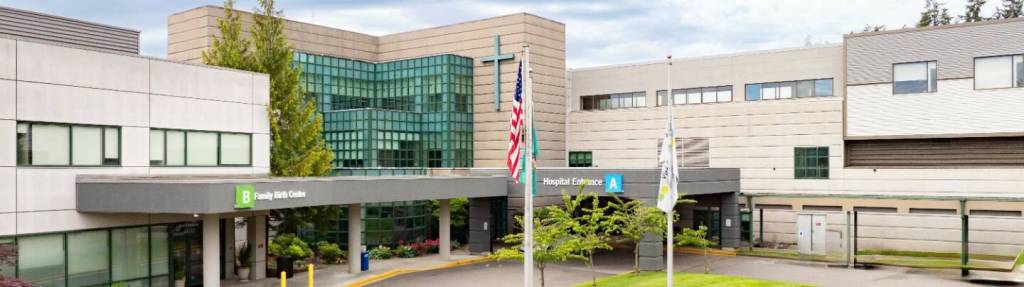
Federal Way’s St. Francis Hospital was recognized by the American Heart Association (AHA) for efforts to improve outcomes for individuals with heart disease and stroke.
54 hospitals in Washington state were recognized with awards this year in categories ranging from stroke to heart failure to atrial fibrillation (AFib), among others.
St. Francis was recognized specifically for the Get With The Guidelines: Gold Plus Achievement. This award recognizes hospitals with two or more consecutive calendar years of 85% or higher adherence on all achievement measures applicable and 75% or higher adherence with additional select quality measures in stroke. St. Francis has received this recognition for at least the past eight years.
Hospitals in Washington are among the 4,800 nationwide that participate in the AHA’s Get With The Guidelines initiative to improve outcomes for Americans who experience heart disease or stroke. Heart disease and stroke are the No. 2 and No. 5 causes of death in Washington, respectively, according to the association.
These health crises require swift and proven treatment to ensure the best outcomes for patients.
“Every 40 seconds, someone in America has a stroke or heart attack,” said Susie Woo, M.D., FACC, cardiologist and board president, American Heart Association, Washington. “High-quality care should be accessible to all and sites awarded through the Get With The Guidelines program help work toward our shared vision of health and hope for everyone, everywhere. Congratulations to these teams for their hard work and commitment to improving patient care in Washington.
Dr. Dennis Wang, Medical Director for Stroke at St. Francis and St. Joseph’s, told the Mirror that the Get With The Guidelines is helpful because it provides both specific benchmarks for success and resources to help increase efficiency and effectiveness.
One statistic they measure is the time it takes a stroke patient to receive care. Their goal is to ensure that stroke patients receive care in under 10 minutes, CT scans within 25 minutes and medication within an hour.
To reduce lasting effects from stroke, this speed is key. Dr. Wang told the Mirror that education for those within the hospital and for potential stroke victims community members helps achieve this.
Stroke symptoms can usually be recognized through the BE FAST acronym, which stands for:
• Balance: Sudden loss of balance or coordination.
• Eyes: Sudden trouble seeing in one or both eyes.
• Face: Facial drooping or uneven smile.
• Arms: Weakness or numbness in one arm.
• Speech: Difficulty speaking or slurred speech.
• Time: Time to call emergency services if any of these signs are present.
Dr. Wang shared that he even had a scare with his own mother recently, who told him she had experienced some severe dizziness and vision changes (possible stroke warning signs) and then had gone back to bed. She was OK, but he said as a stroke expert, this type of experience could be an important time to call 911 rather than brushing it off.
Maintaining a speedy response time within the hospital is done through reviewing data and finding outliers, then looking at how to improve them, as well as by implementing new technology and practices.
One example of this new technology that has improved care is the implementation of AI and more coordinated communication systems.
During Dr. Wang’s career within the last 20 years, he said technology has improved in many different ways, like seeing blood vessel opening tools going from “completely next to useless to actually quite effective.”
With AI specifically, automatic detection of blood clots in the thousands of brain images from a CT scan has made a huge difference, as have automatic alerts and the ability to access these images and approve treatment from a cellphone rather than making multiple phone calls to coordinate care.
All of this innovation makes it an exciting time to be in the medical field, he said.
“I tell my kids, in general, you’re so lucky,” Dr. Wang said. “I wish I could live longer, because I can’t wait to see all the cool things that are going to come out in the future, not only in medicine, but in general.”
Among many other supports, the Get With the Guidelines program provides resources to hospitals to help adapt and utilize these new technologies to improve outcomes.