SIDELINES: Is Lance Armstrong still the hero he used to be?
Published 4:17 pm Thursday, August 30, 2012
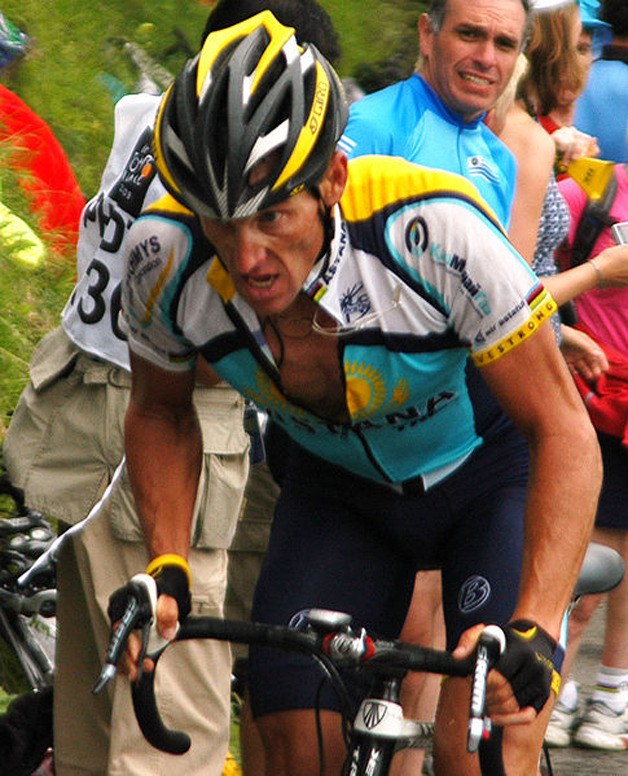
I really don’t know what to make of the Lance Armstrong situation.
Unless you’ve been living under a rock or hiding on a beach somewhere for the last week, the U.S. Anti-Doping Agency basically erased the most-decorated cycling career in history last weekend and banned Armstrong for life from the sport. The USADA came to the conclusion that Armstrong used banned substances during his unprecedented run.
That information was not anything new. The USADA had been dogging Armstrong for years. The biggest news last week came when Armstrong threw in the towel in his fight against the doping charges.
Armstrong, who retired a year ago, said that he would no longer challenge USADA and declined to exercise his last option by entering arbitration. He denied again that he ever took banned substances in his career, calling USADA’s investigation a “witch hunt” without a shred of physical evidence.
“I have been dealing with claims that I cheated and had an unfair advantage in winning my seven Tours since 1999. The toll this has taken on my family and my work for our foundation and on me leads me to where I am today — finished with this nonsense.”
It makes zero sense to me why a man who has made his reputation by defying the odds would give up. Armstrong is famous for beating cancer and then winning a record seven-straight Tour de France championships.
When an athlete and man who never quits ends up quitting, it’s kind of hard to take.
His dominance of the Tour de France elevated the sport’s popularity in the United States to unprecedented levels.
But here’s where things get tricky, in my eyes. Armstrong isn’t just another retired millionaire athlete who sits at a table in a mall, signing autographs for $50 a pop.
Armstrong is using his fame to enlist lawmakers and global policymakers to promote cancer awareness and research. His Lance Armstrong Foundation has raised nearly $500 million since starting up in 1997. You can’t go anywhere without seeing somebody wearing the “Livestrong” plastic yellow bracelet.
It sure looks like Armstrong cheated. But it also looks like the entire sport of cycling has cheated. When Armstrong’s Tour de France titles are stripped, 14 of the last 17 race winners have been forced to give back their yellow jerseys. Also, in five of Armstong’s seven wins, the second-place finishers were also implicated in doping scandals. Not good.
But did Armstrong give up his fight against the USADA because he had just had enough of their “witch hunt,” or did he give up because he was guilty?
It is a little odd that the most tested athlete in history never failed a performance-enhancing drug test during his career. The USADA convicted him on hearsay. They took the word of fellow cyclists, who were documented cheats themselves.
“If I thought for one moment that by participating in USADA’s process I could confront these allegations in a fair setting and — once and for all — put these charges to rest, I would jump at the chance,” Armstrong said in a statement. “I refuse to participate in a process that is so one-sided and unfair.”
So I still don’t know what to think of Lance Armstrong, the athlete. But I sure hope he continues doing what he’s been doing to raise awareness and money to fight cancer.
• Are you ready for some football? I am. I can’t wait to watch the Huskies open their season Saturday, and see the Seahawks open their season next week against the Arizona Cardinals.
But, to be completely honest, I’m more excited to play fake football with my buddies. Labor Day Weekend is no longer known as the end of the summer. It’s now known as the start of the fantasy football season.
A ton of fantasy footballers will hold their drafts during the holiday weekend in preparation for the actual NFL season, which kicks off Wednesday night with a barnburner between the New York Giants and Dallas Cowboys.
Fantasy football has become an accepted mainstream form of entertainment and is currently dominating the websites of billion-dollar companies like ESPN, CBS and Yahoo! You can’t turn on any type of sports-related program without hearing commentary about fantasy football. Every little injury, hold out or trade is fodder for analysis about what it means in terms of fantasy football.
Fantasy sports participation has grown over 60 percent the past four years as over 32 million people are now actively playing in the U.S. and Canada, according to research conducted by Ipsos for the Fantasy Sports Trade Association (FSTA).