Federal Way looks to clear 800 unlawful drug possession cases
Published 9:49 am Friday, May 8, 2026
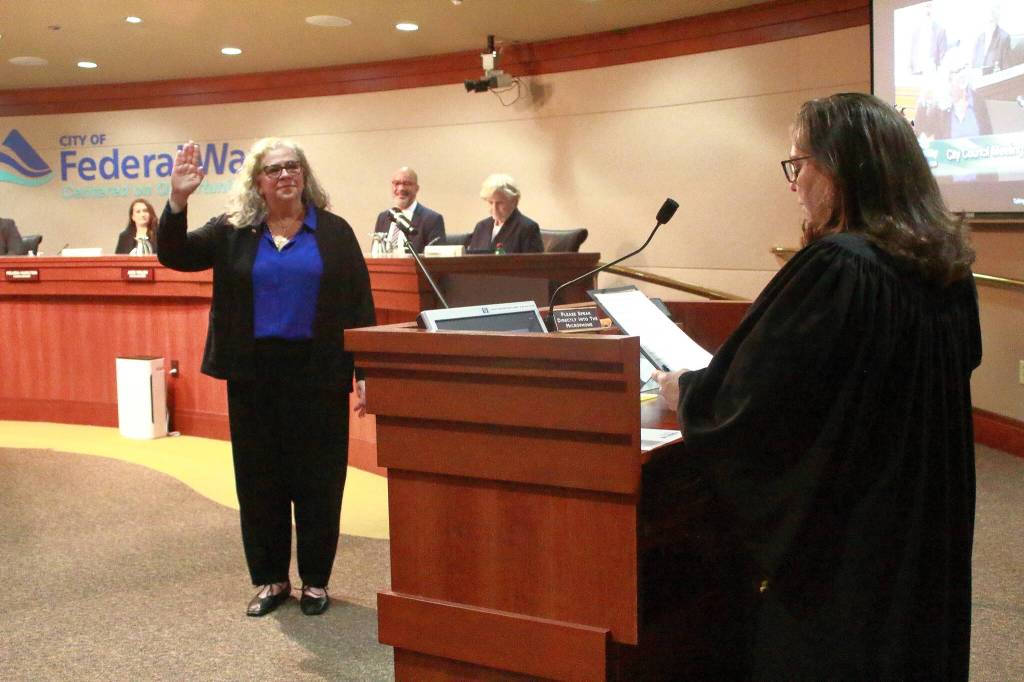
The Federal Way Municipal Court will work to clear unlawful drug possession charges for about 800 people in the next year after receiving approval from the city council to use state funds for the project.
The situation goes back to a Washington State Supreme Court decision in 2021. Referred to as the Blake Decision, the ruling overturned 50 years of drug possession charges.
The core issue in the decision was that the state’s law didn’t require proof of intentional possession. In other words, someone could be charged with a felony even if they had no idea they were in possession of an illegal substance.
Those with charges that qualify can have them cleared and are owed a refund for any fines they paid, including any interest or late fees.
In the five years since this ruling, local municipal courts have interpreted their responsibility to act, and responded in a variety of ways. Local municipalities like Fife, Kent, Puyallup, Milton, Gig Harbor, Edmonds, Tukwila and Issaquah have finished proactively processing their Blake Decision records, and Renton is currently in the process of completing its backlog as well.
In some courts, the prosecutor has taken the lead, while in others, municipal court judges have taken action to go through the backlog of cases and correct the record.
The contrast between these variations in approaches is under the spotlight in Federal Way right now, where a discussion on a grant application brought heated reactions from several city council members at an April 28 Finance, Economic Development, Regional Affairs Committee (FEDRAC) meeting.
The issue has surfaced now because of an upcoming deadline for new case management software, which recently elected Federal Way Judge Danielle Havens and Court Administrator Maryam Olson told the council committee would make processing these old cases much more difficult.
Havens also noted that state funding for dealing with this backlog of Blake cases is drying up, and if Federal Way doesn’t take the time to clear them out now, the city could be left with the bill.
These factors add urgency to taking a proactive approach to clearing out the cases. To Havens, it is also just the right thing to do.
“For me, what the Blake ruling made clear is that those convictions were inaccurate and that there needs to be a correction,” Havens said.
The justice system has an important role in holding people accountable, Havens told the Mirror, but said that this should go both ways.
“We should hold ourselves to a very high standard of service,” Havens said. “I want people to trust that we have their best interests at heart.”
To her, this means that if someone has an unlawful conviction on their record, members of the justice system have a “moral responsibility” to take steps to correct that.
For previous Judge Dave Larson, who presided over the Federal Way Municipal Court until his recent retirement, the right course at the time was to leave decisions about how to handle Blake cases up to the court’s prosecutor.
With all that being said, Larson told the Mirror that with the upcoming deadline around software and the availability of state funds, he would most likely be taking similar steps to what Federal Way Judges Brad Bales and Havens are doing now.
During the FEDRAC meeting, Councilmember Martin Moore asked Havens why the cases hadn’t been cleared in the past. Havens implied that Larson had declined to manage them because of his personal opinions about the Blake Decision.
Larson later told the Mirror this assertion was “ridiculous” and expressed frustration that his character and ethics were called into question.
Havens also noted at the FEDRAC meeting that the city had previously been allotted reimbursement funds back in 2022 if the court had chosen to act back then.
Larson told the Mirror that it isn’t that he had chosen not to act, but that he didn’t see it as something that he as a judge needed to be acting on because it was a prosecutorial decision, and ethically it was important to him to keep seperation between those areas of the court. He also said he did not make these decisions on his own, but engaged in discussion about the best thing to do with Judge Bales in the court.
In an email to Mayor Jim Ferrell and the city council members following the FEDRAC meeting, Larson stated that “the prosecutor has the legal standing to contest the applicability of Blake to our local code and state law. Hence, that is why they were asked to bring motions. The other option, if they felt that the local code or state law did not fall within Blake, was to contest a defendant’s motion to vacate judgment if a defendant asked for that relief.”
Larson also said that “the consensus of many judges I spoke with at the time this first came out was that it was not appropriate for judges to sit in their offices and unilaterally reimburse money because it’s not our money to give back,” although he confirmed later that there were state funds that would have covered both processing and fine refunds for these cases.
Specifically, the state set aside over $500,000 in available reimbursement funds back in 2022 that were not utilized by the court.
Havens’ comments at the FEDRAC meeting led to several passionate responses from council members at the April 28 meeting including Council President Susan Honda, Linda Kochmar and Melissa Hamilton, who defended Larson and accused Havens of “throwing him under the bus.”
Moore expressed his respect for Larson and also defended Havens, saying he had asked about why the cases hadn’t been processed to get some historic context for the situation.
Hamilton interrupted Moore with a point of order, which she explained was because she didn’t think they can “discuss Judge Larson’s motives.”
Councilmember Honda later clarified with the Mirror that she and others felt the situation was made political because Larson recently announced his political campaign for Washington Supreme Court.
Havens told the Mirror afterward that she had been aware that Larson was planning to seek election in that role for weeks and wasn’t thinking about that at the time, and had no intention of “throwing him under the bus.” She added while she believes the right thing to do as a municipal court judge is to take action to correct these cases, Larson’s perspective and decisions are legally legitimate.
At this point, the city has limited time to take advantage of state reimbursement programs, and to clear these cases before the incoming software makes it extremely challenging to do so, according to the discussion.
Council committee members ultimately voted to allow the application for the grant to move forward to the upcoming city council for a vote, where it was approved as part of the consent agenda without further discussion.
Editor’s note: A previous version of this story misstated council member Melissa Hamilton’s expressed intent regarding her point of order during the FEDRAC meeting. This has since been corrected.