Sikh community celebrates Vaisakhi in Federal Way
Published 9:50 am Wednesday, April 15, 2026
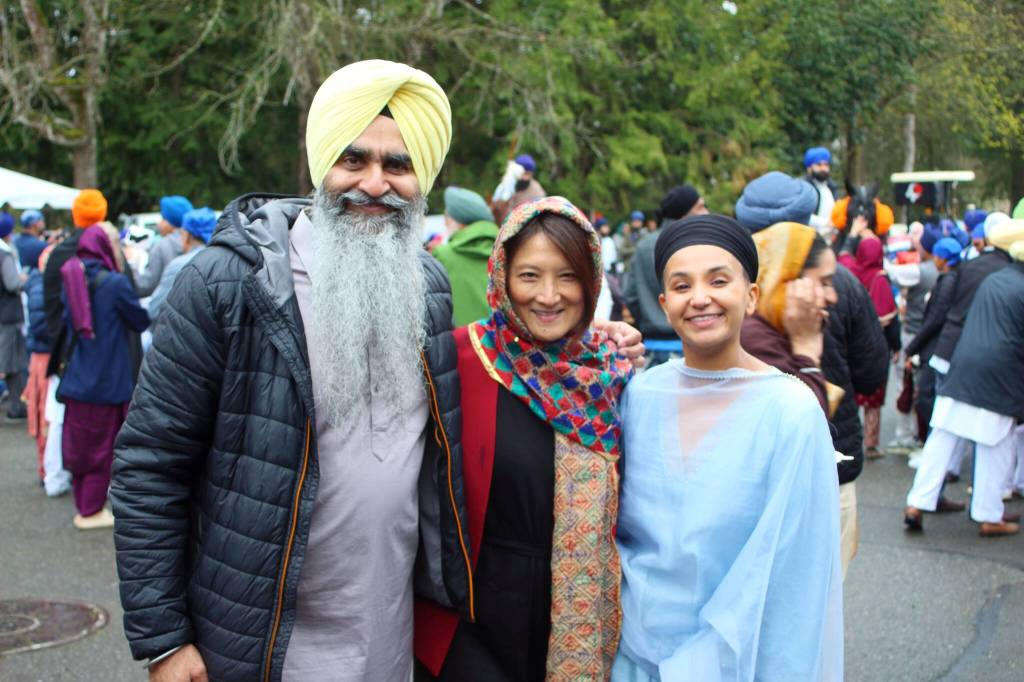
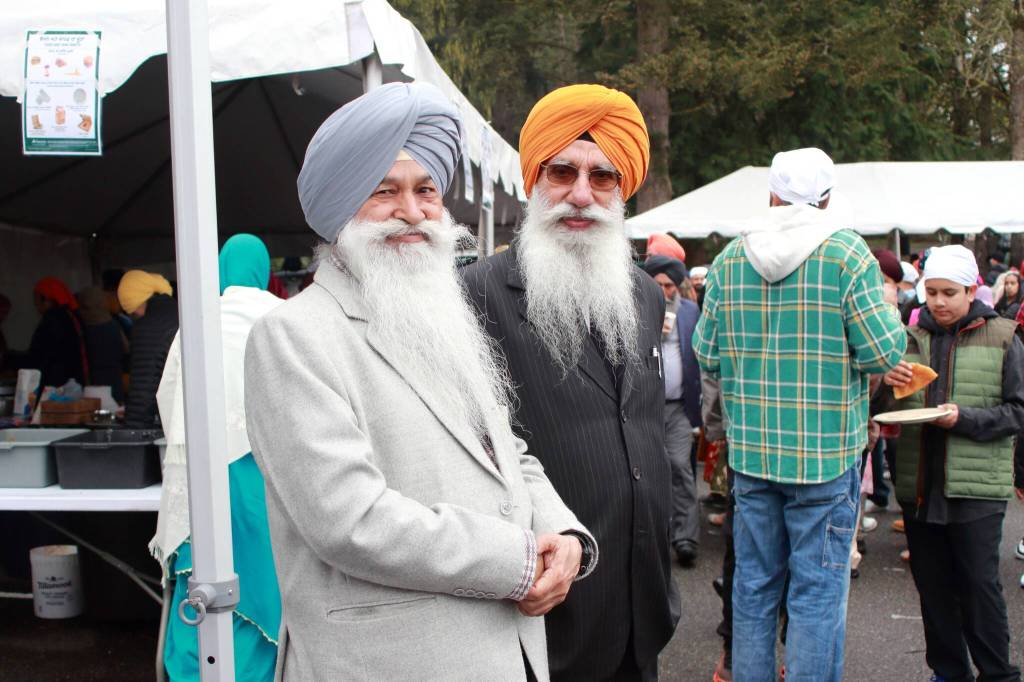
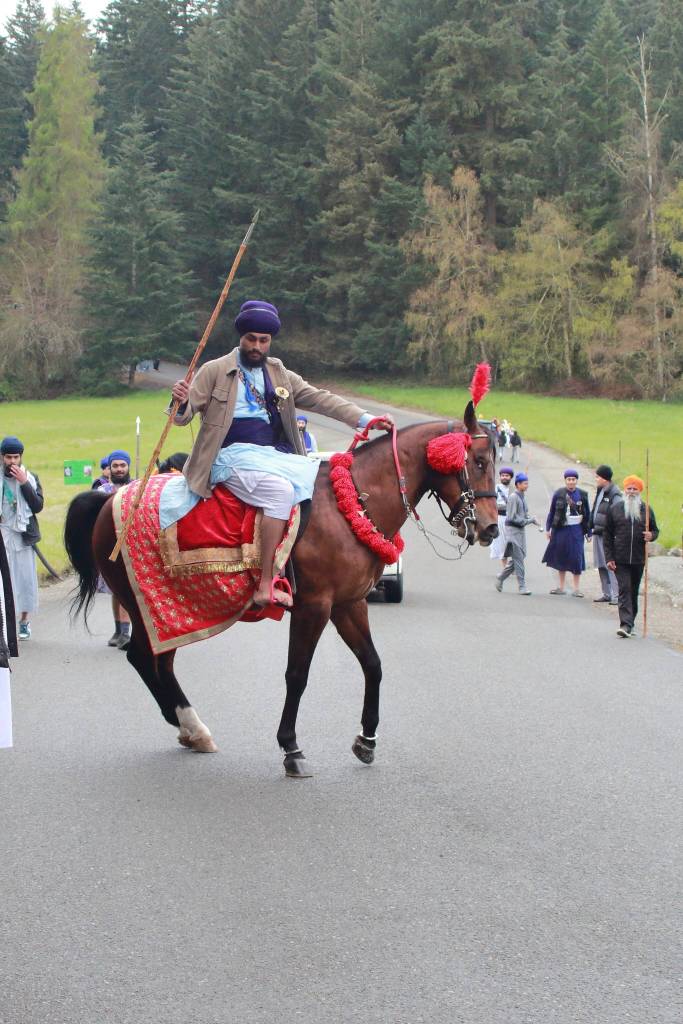
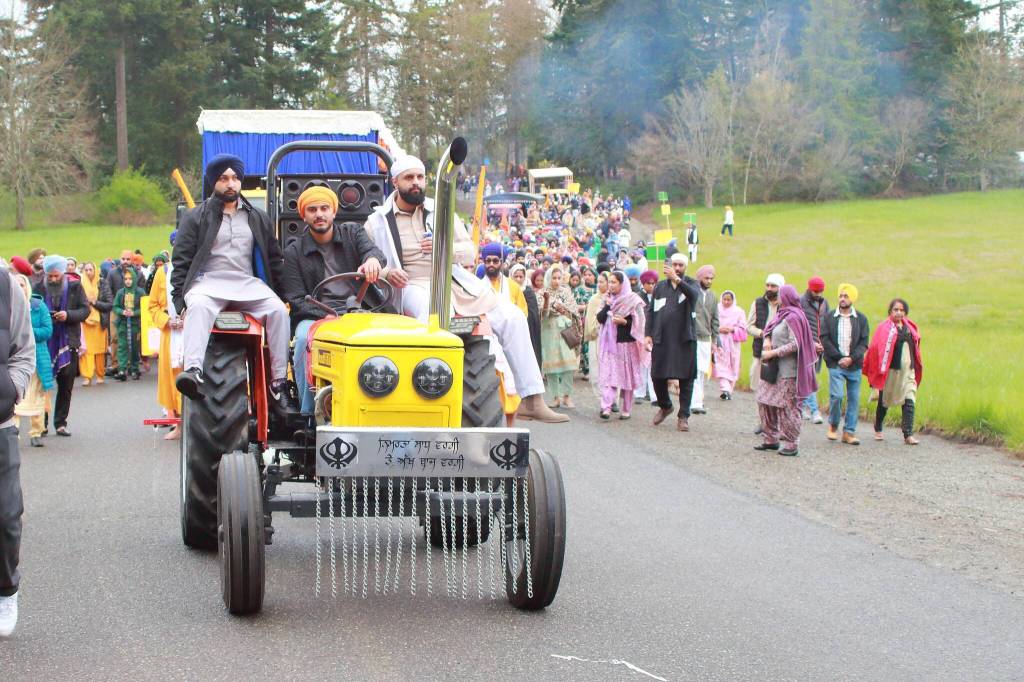
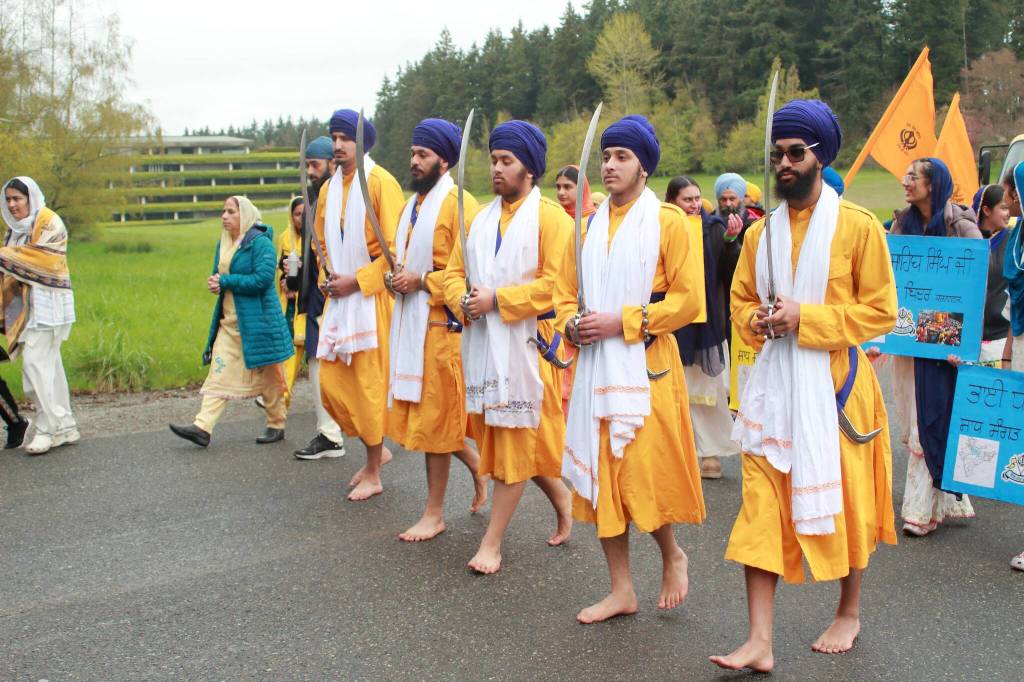
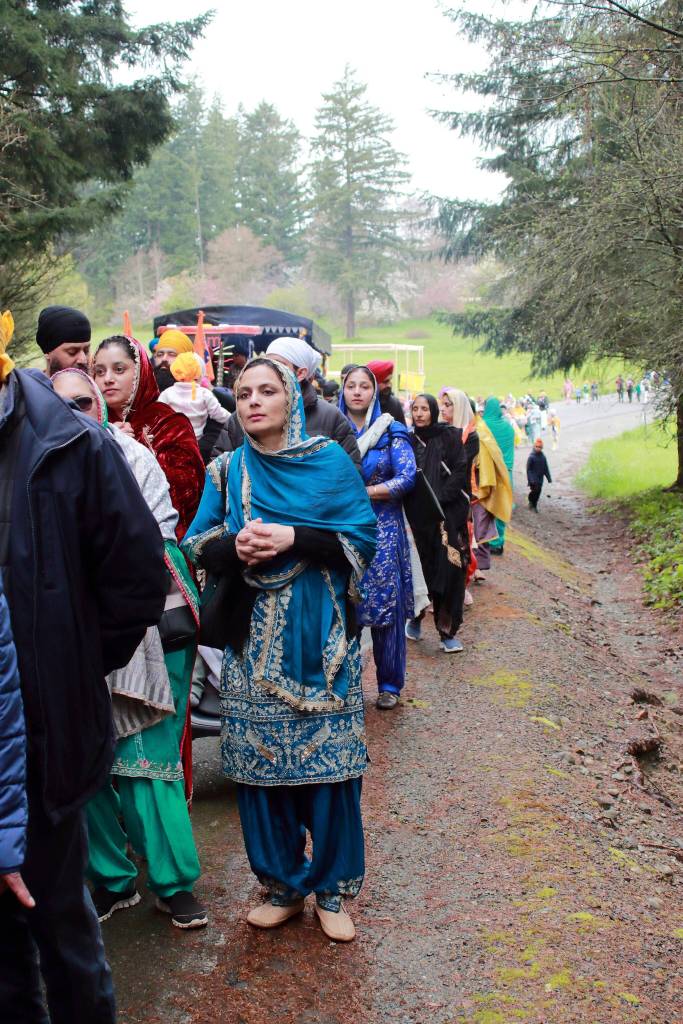
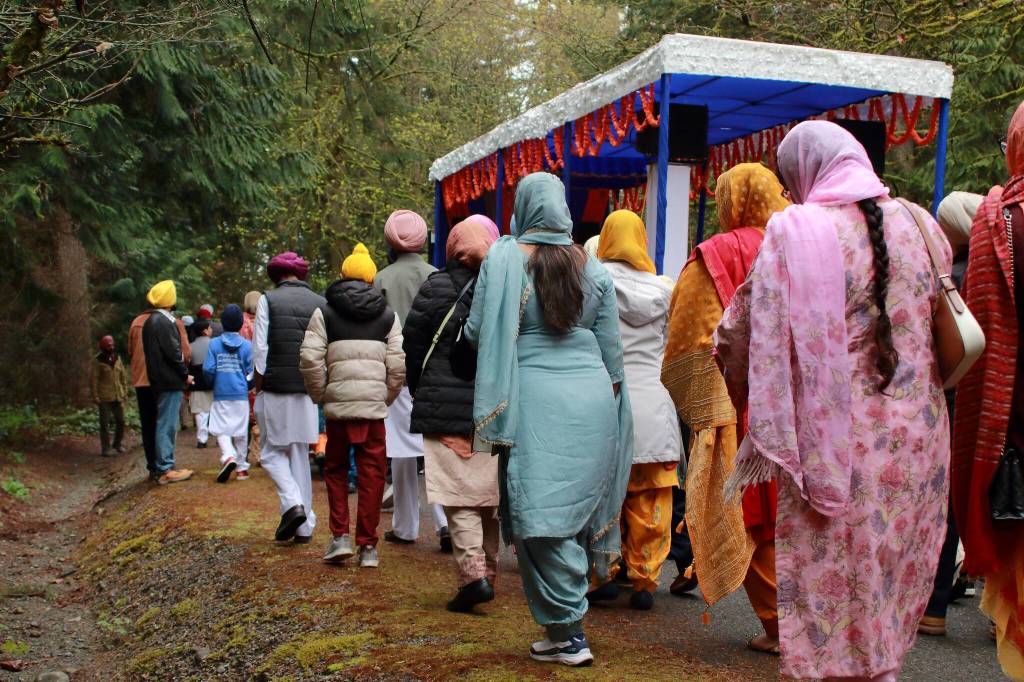
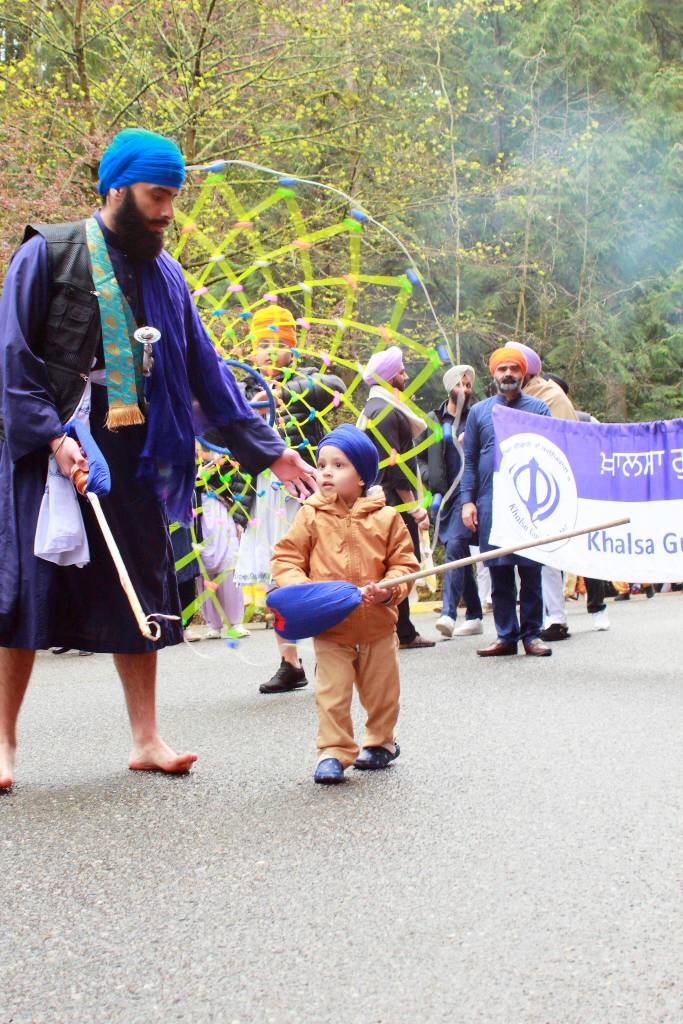
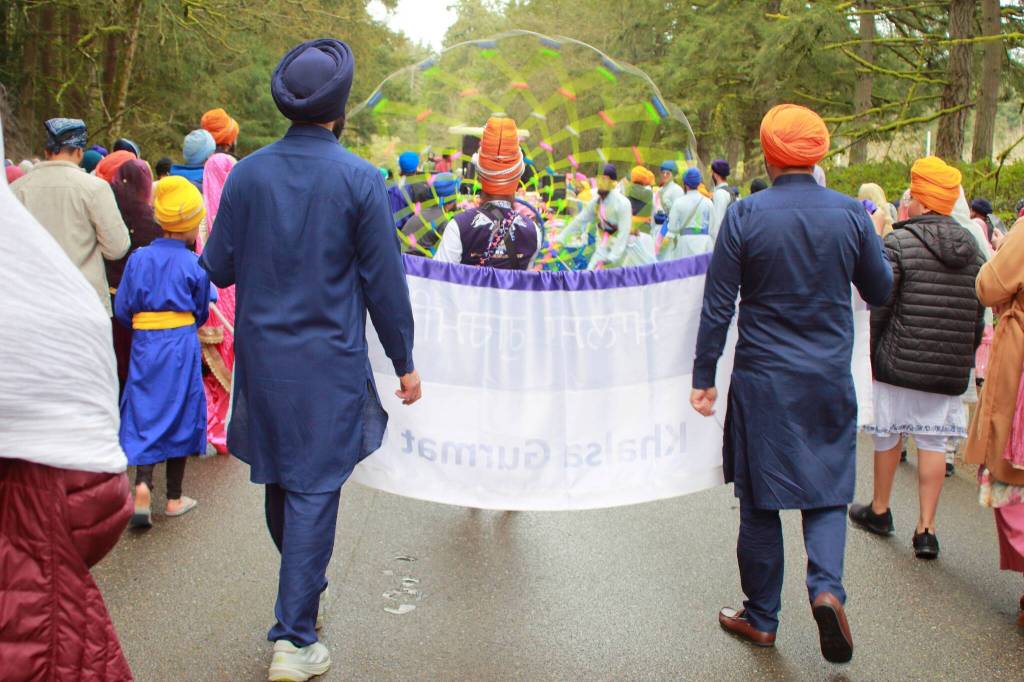
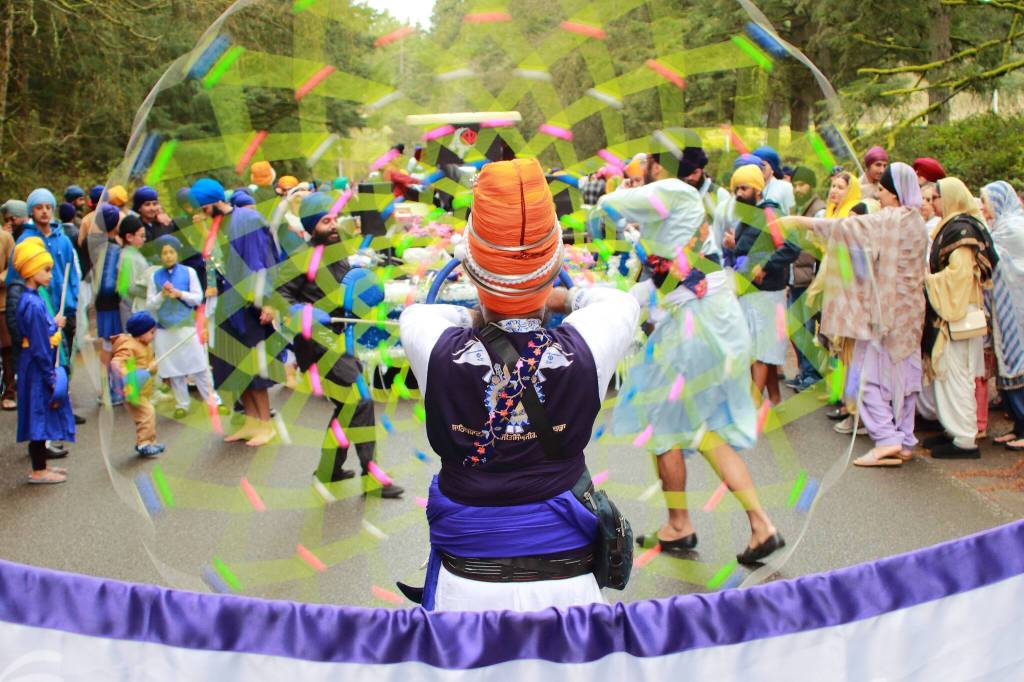
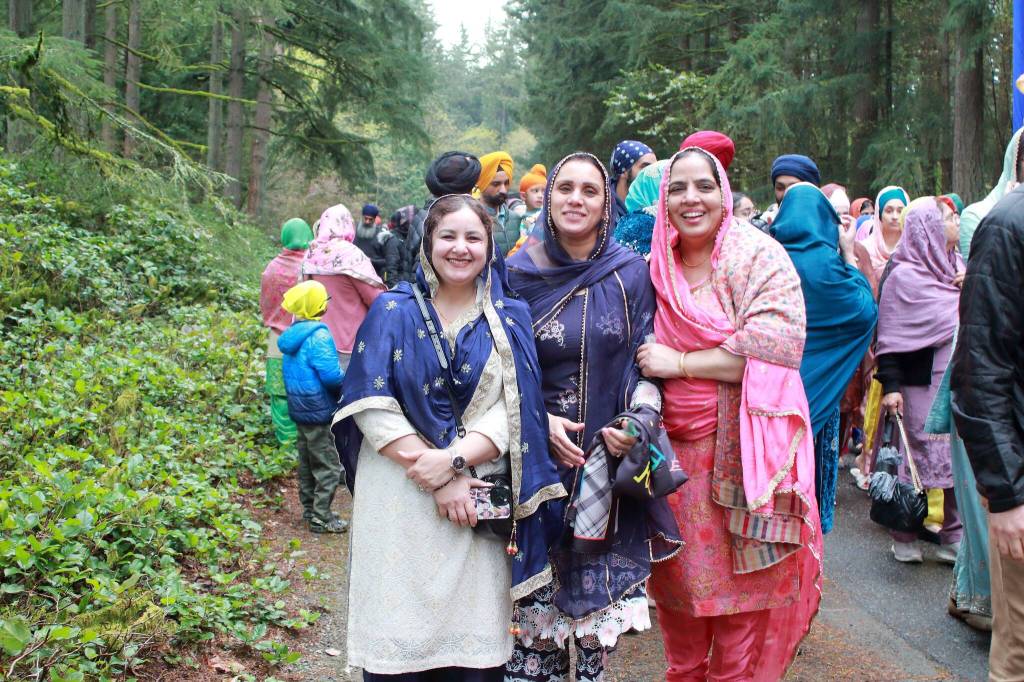



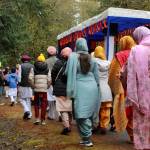
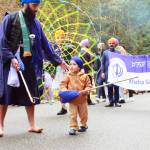


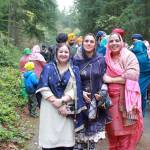
Hundreds of members of the local Sikh community welcomed the public to celebrate and recognize Vaisakhi with them on April 11 in Federal Way.
Featuring an abundance of free food, cultural traditions, a parade and a welcoming atmosphere, the annual spring harvest festival brought together people from around the region to participate.
The day was filled with performances and celebrations that included young people who shared music, singing, speeches and poems.
Beginning at 2 p.m., the nagar kirtan (parade) wound its way from the Khalsa Gurmat School at 2835 S. 344th St. in a procession along Weyerhaeuser Road, past the Rhododendron Species Botanical Garden and Pacific Bonsai Museum and out onto South 336th Street.
Horses and tractors highlighted the historical harvest and farming aspect of the celebration while representatives of the Panj Pyare (the Five Beloved Ones) dressed in saffron-colored robes walked barefoot down the forested road.
Practitioners of the Sikh martial art Gatka demonstrated the spinning of a colorful ceremonial weapon called a Vadda Chakkar and sparred with wooden swords throughout the parade.
Federal Way leaders including Mayor Jim Ferrell, Council President Susan Honda, Councilmember Les Sessoms, Councilmember Jack Walsh and Councilmember Martin Moore attended.
Sikhism (or Sikhi) is the 5th largest religion in the world and began in South Asia more than 500 years ago. Sikh values include the importance of equality, religious pluaralism and justice for all. The core Sikh beliefs are a devotion to God, truthful living and service to humanity, according to the Sikh Coalition.
One embodiment of these beliefs is in the practice of langar, a free community meal where everyone is seated on the floor together.
“Everybody eating at the same level means there is no hierarchy,” 14-year-old Sikh community member Sifath Arora Kaur told the Mirror. “I think it’s just good to have a sense that nobody is going to be better than you, or lower than you. Everybody is just the same. And that also connects to just having a good community.”
Sharing resources like food freely is another core value in their community.
Hira Singh told the Mirror that while many religions have an expectation to contribute 10% of their income back to the community, in their community, they are taught that “even if I was hungry and only had one piece of bread, if you walked up to my door I would give you half,” Singh said.
For Sifath, attending the gurdwara and being around her Sikh community is the highlight of her week. She is the only Sikh at her school in Redmond, but at the Khalsa Gurmat School, “here I can be myself, I get so much love … I have so much support and I never feel lonely.”
Classes at the Khalsa Gurmat School include everything from music to Punjabi language classes to life skills like computer science classes, as well as lessons in culture and history of the Sikhi community. The school also recently added a full-time preschool program.
About 350 students attend the school.
Sifath said it fills her with joy to get to be around her community, especially since she has family in India who are much harder to visit and be connected with. “I can’t go to India, but I can come here,” Sifath said.
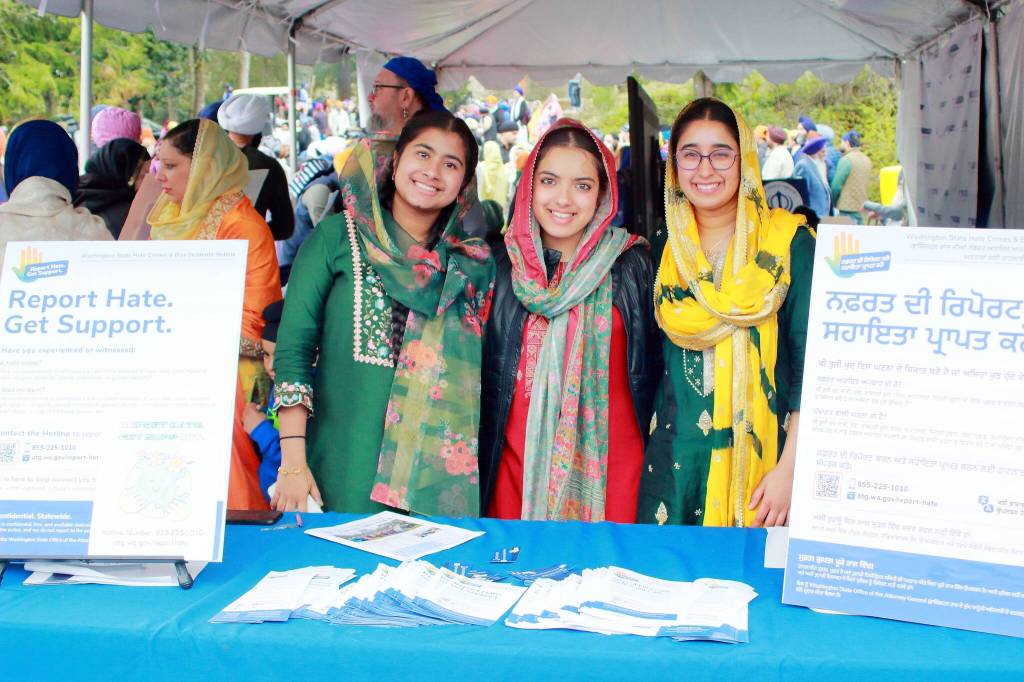
In addition to her role in the school’s administration office, Sifath has also been involved with advocacy efforts that have resulted in the creation of a hate crime and bias incident reporting hotline. The hotline is a non-emergency information and referral point to help individuals affected by hate crimes and bias incidents access support.
It is confidential and available in multiple languages, and only contacts law enforcement with the reporter’s consent. The hotline can be contacted at 1-855-225-1010 or at atg.wa.gov/report-hate.
The community’s focus on service to humanity leads them to have a broad approach to making a positive impact. Active community member Hira Singh said he does not have an official title, because everyone is a volunteer and equal, but that his role focuses on connecting to the broader community.
While he is active in helping his Sikh community however it is needed, he said “I don’t want the focus to just be on being a Sikh,” and is involved with many community organizations, like his role as a board member of King County Sexual Assault Resource Center and more.
Other volunteers in the community have participated in the Interfaith Women’s Conference, marched alongside the Faith Action Network during Interfaith Advocacy Day in Olympia and more.
These actions and celebrations like Vaisakhi reaffirm that “while our prayers may sound different, our call for justice, healing and compassion is universal,” as the community shared in their April 2026 newsletter.