Music and creativity gives Federal Way man strength to fight disease
Published 10:58 am Monday, February 9, 2015
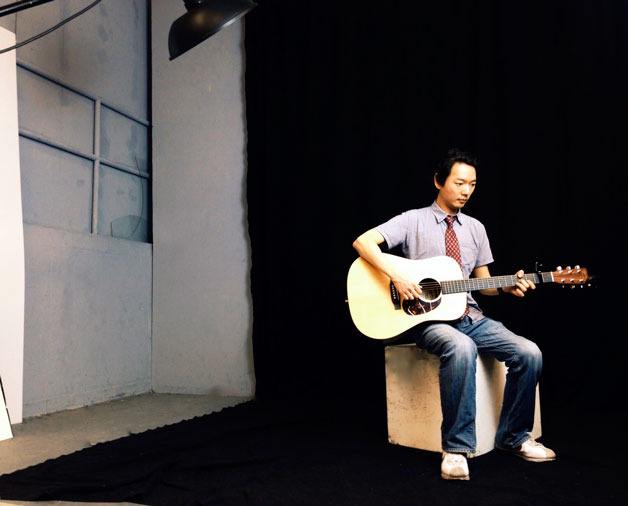
As a way to rehabilitate his stiff hands, Andy Chang began practicing guitar every day.
After battling dermatomyositis — a rare autoimmune connective tissue disease that affects the muscles, inhibiting simple movements like lifting a finger — 30-year-old Chang now believes those who lead a normal, passionless life with bills to pay and jobs to keep are the ones who are truly conflicted.
“It bothers me when people have big dreams but listen to the voice in their head that tells them they can’t do it,” he said. “What if someone is held on the belief that they’re going to be successful and the possibility of that not happening is zero? Everyone would go after what they want.”
The singer-songwriter lives in Federal Way with his parents and younger brother, Joe, in the same modest four-bedroom home he grew up in and where — despite judgment and criticism from his peers for not having a job and living off of his parents’ income — he creates music with his voice, laptop and guitar.
“Making music is the hardest thing I’ve ever done in my life,” he said. “But I can’t stop because the music already exists in my imagination — I just have to execute it.”
Chang is the singer and songwriter of his indie-pop solo, “The Imaginary Owls,” and has proven he’s determined to make his dreams of becoming his own artist a reality.
He recently submitted one of nine songs from his first album to NPR’s Tiny Desk Contest.
It was shortly after his yearlong trip in 2008 to Thailand, teaching English and receiving a letter of acceptance to Syracuse University’s master’s program in English with a full-ride scholarship, that he was diagnosed with the incurable disease and forced to forgo his acceptance.
“It was ironic; the timing was perfect in the most tragic way,” he said. “I’m glad it happened because it made me check myself to become humble. If it didn’t, I’d be a worse person now.”
He remembers lying in the hospital bed fighting back tears, not for his life, but for his chance of becoming an English literature professor and “someone society deemed respectable and successful.”
“At the time, I thought my life was ruined — it was so stupid,” he laughed. “I didn’t really care about the disease and that it could kill me. I was more upset about that scholarship.”
Looking back nearly six years ago, Chang admits he was an egomaniac and that deep inside, his decision to apply for graduate school was because it was “what the world expected.” He said if graduating with a master’s in English cost him the opportunity to discover his zeal for music, he would have made the wrong choice.
While he was hospitalized, it was only after his muscles began to atrophy and his ego plummeted did he unleash his musical creativity. He turned his writing into poetry and his poetry into songs, and he realized his suffering fueled his musical passion.
“Making music was therapeutic, medicinal, energizing and meditative — all things you shouldn’t be experiencing when everything around is telling you to feel like crap,” Chang said. “Being creative musically was a way to be in touch with a part of me that wasn’t sick.”
He is currently in remission and has decided to stop taking his prescribed medication.
Sitting across from him at a coffee shop, it’s hard not to mirror his steady blinking. There’s no sense of urgency as he sips his loose-leaf jasmine tea at a pace anyone with no sense of urgency would drink.
Likewise, his music is light, and pleasant — the perfect soundtrack for a leisurely ride on The Seattle Great Wheel by Pier 57 in downtown Seattle, for example. While singing the lyrics to one of his more instrumental songs, “Too Little, Too Late,” his movements are slow as he strums his guitar, looking heavily sedated but also euphoric.
“I could easily see his demos selling to an anime or video game,” said his brother. “But it would also run the risk of being perceived as boring and drawn out if compared to today’s mainstream music.”
Despite the over-saturation of contemporary pop music frequently heard on the radio, Chang is mindful in making “The Imaginary Owls” as authentic as he can, never forcing himself to sit down and write music, or creating deadlines for himself.
“There’s an innocence in his music that not a lot of musicians are brave enough to reveal, but Andy isn’t afraid to be vulnerable,” said Jo Krukowski, Chang’s former colleague while teaching English abroad in Korea, and now one of his closest friends.
Chang finds musical inspiration in Seattle’s Capitol Hill neighborhood and reminisces about his first show, “Cursive” at Neumos when he was 18 years old. His hometown is in Federal Way, however, where you’ll find him is sitting in Barnes & Noble with earbuds in and his brain in sync with his musical creations.
He hopes to see his band’s name when NPR announces its winners on Feb. 12, but says he won’t be upset if he doesn’t.