Federal Way veteran’s career spans four decades, three continents
Published 9:17 am Friday, May 25, 2012
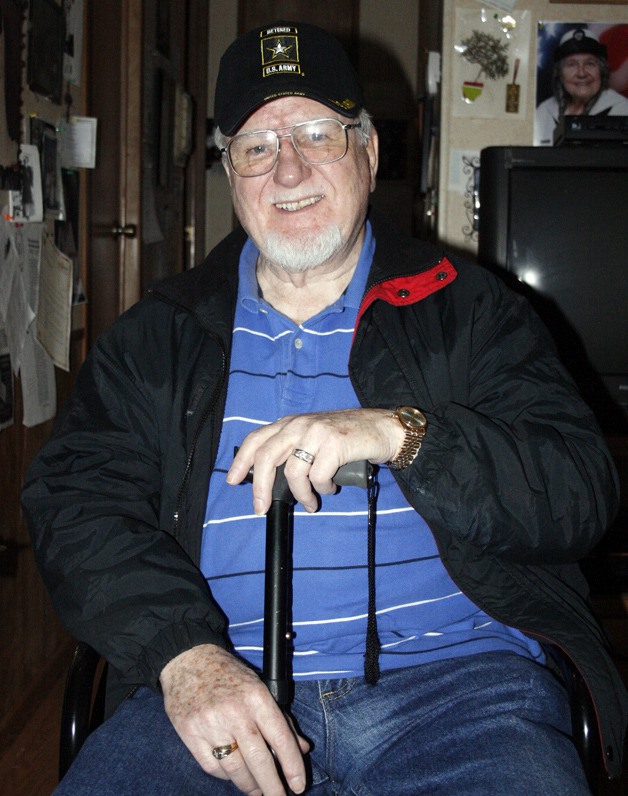
While he now takes it easy in the small development known as Kloshe Illahee, at one time Federal Way resident Ken Newton went all over the world in service to his country as a member of the Army.
From intelligence gathering to photography to being the lead administrator over officers and soldiers clubs, Newton did it all, and did so in vastly different places.
“I went in the first time when I was in high school, into the active reserves, that was in 1955. Then I took a short discharge and went active, and went through basic at Fort Lewis,” he said. “Then I went to motion photography school in Fort Monmouth, New Jersey, and then I was shipped to Japan, where I was in an intelligence unit.”
Newton said his intelligence unit in Japan was shut down and operations were shifted to Korea. He was then transferred to a medical research lab, where he ended up with a strange assignment.
“I became the photographer, and that mostly comprised (taking photos of) autopsies, operations, photomicrography. I guess I saw about 200 autopsies in that period of time,” he said.
His first go-around finished in 1959, and he stayed in the active reserves until 1962. During this first intermission in his military career, Newton said he put his work with the intelligence gathering unit to good use, serving as a private detective in the Los Angeles area.
“I ended up on surveillance most of the time, which also meant going in and testifying in court,” he said. “And probably the most famous person I testified for was Audrey Hepburn. Wonderful lady. She was just as gracious and unassuming off stage as she was on stage. Really a fabulous star.”
Newton re-enlisted in 1971 as the war in Vietnam ramped up. He said he felt compelled to get back in, considering the fact that many people were draft dodging at the time. He gave up a managerial position at a manufacturing company to come back to serve his country.
“I went back in the service in 1971 as a private. I lost all my rank, had to go through Basic Training again. I was called ‘Grandpa’ in the unit,” he said with a small chuckle. “I had come back to go into rotary pilot school (helicopters), to do what they called ‘dustoff,’ where they’d take the helicopters into combat zones. But they said I was too old for that.”
Instead, he was sent back to Asia, specifically Korea, to be an investigator for the club system there. He traveled to every club from the Demilitarized Zone in the north to clubs located in the far south of the country. He said after his second time in Korea he was supposed to become a nuclear budget analyst, but that position was eliminated while he was still en-route back to the U.S.
He ended up in Fort Lee, Va., to go through Club Management School, and then was sent out to Fort Ord, Calif., to manage the club system there for a while.
He was then sent to Germany to manage the club system in a number of cities there. He still recalls one particular club in Schaufenberg, Germany, where he caught a veteran soldier redhanded, stealing money.
“One club manager in that system..had 19 years in the service. He was a Sergeant First Class, but he ended up going to Leavenworth (Kansas, where a famous military prison is located). He was taking money from that club and putting it in the bank and turning in receipts like he was supposed to, but I happened to be checking that and I saw that it was not our bank account,” Newton said.
One other memory that sticks out for the 74-year-old Newton was allowing part of the Jewish community in Munich to use the club there for part of their Seder/Passover observance.
“I had to give up part of the kitchen so they could make it kosher. But it was interesting, it was a good experience, and I enjoyed that,” he said.
Newton had issues with his spine that sidelined him for the rest of his career after he got back from Germany, but one positive of that was the fact he got to meet a famous American general from World War II.
“I actually worked down the hall from General Omar Bradley. What a man he was. One of the best orators I’ve ever known. He could sit, and it didn’t matter what he was talking about, you’d sit there spellbound. He was just really something,” Newton remembered fondly.
Like any good soldier, Newton downplays his four decades plus of service to his country.
“I don’t think it’s really anything special,” he said, “but it was pretty diversified.”