

Winter may seem like a bad time to visit a museum of living plants, but curator Aarin Packard at the Pacific Bonsai Museum in Federal Way said it’s one of the best times to see details of the craft.
In deciduous bonsai that have lost their leaves, visitors can see the “bare skeleton branch structure, which in bonsai is highly valued. You can see all the effort that went into the pruning and the twigginess of that kind of bonsai,” Packard said.
The coniferous bonsai on the other hand “provide a really great visual contrast with that evergreen, stately comparison with the bare deciduous,” Packard added.
The Pacific Bonsai Museum is actually one of only two bonsai museums in the country. There are more opportunities to see bonsai than that, but other displays are classified as collections, which have a different function.
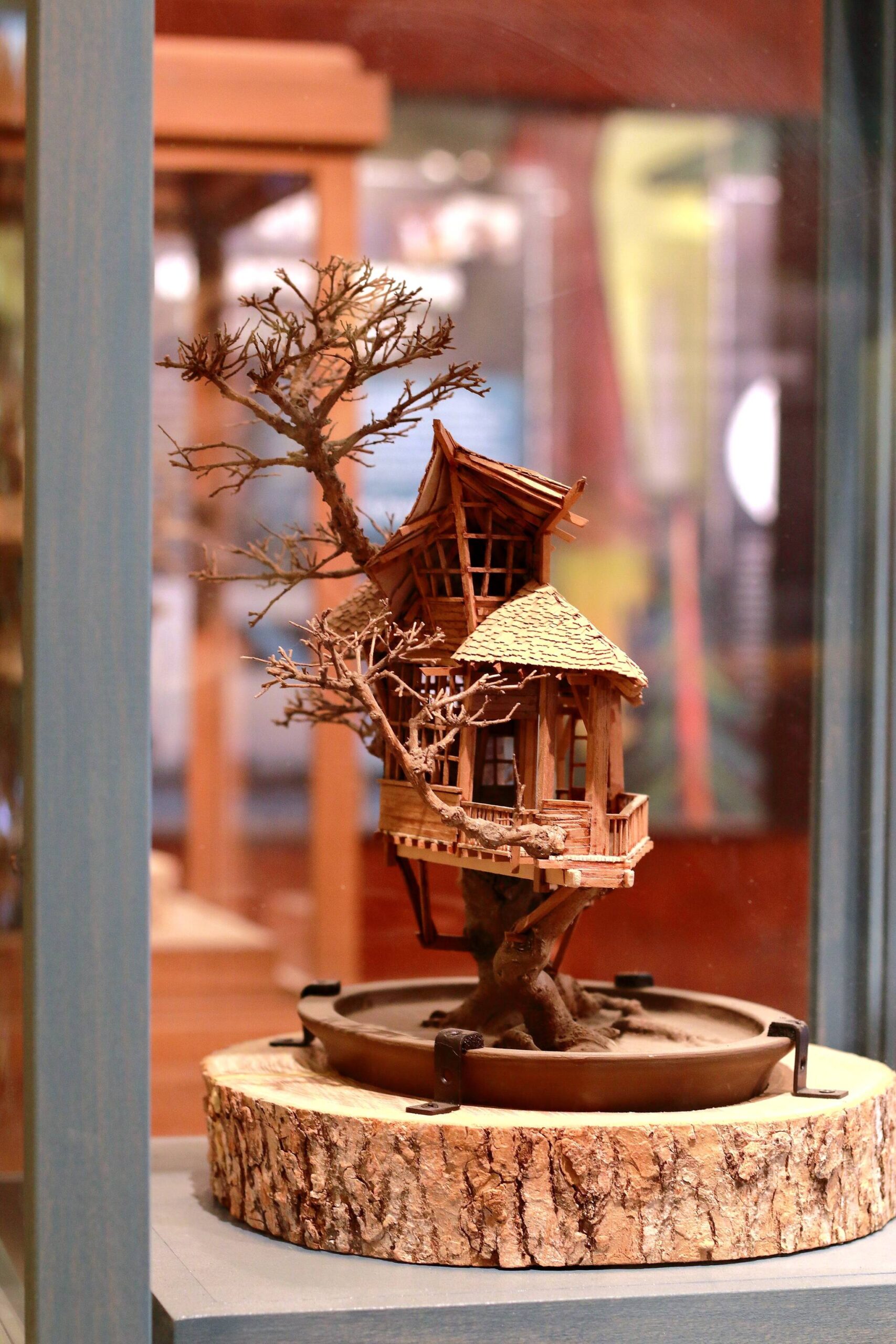
A miniature treehouse is integrated with a deceased bonsai tree in exhibit Building Wonder: Bonsai Treehouse honoring the creative legacy of Dave Creek, a lead character designer for “Bob’s Burgers.” Six tiny treehouses are featured in the exhibit that runs through Dec. 21, 2025. Photos by Keelin Everly-Lang / the Mirror
Rather than being a place to simply enjoy the beauty of bonsai, Packard said the goal of a museum is about education.
This goal is what guides him when he conceptualizes new exhibitions. He also draws inspiration from current events and in thinking about how to best connect with visitors.
While most Pacific Bonsai Museum exhibits are created and crafted by their in-house curator, a special traveling exhibit is on view now until Dec. 21, 2025, in the museum’s Pavilion.
It’s titled “Building Wonder: Bonsai Treehouse,” and it “honors the creative legacy of Dave Creek, a lead character designer for ‘Bob’s Burgers,’ through an extraordinary exhibition celebrating his unique art of creating miniature treehouses,” according to the website.
Guests can see six meticulously crafted treehouses integrated into dearly departed bonsai, along with photographs documenting Creek’s life and creative journey, quotes highlighting his creativity and passion, and a representation of the mobile “van life” studio Creek created to work on his craft daily, even in remote locations.
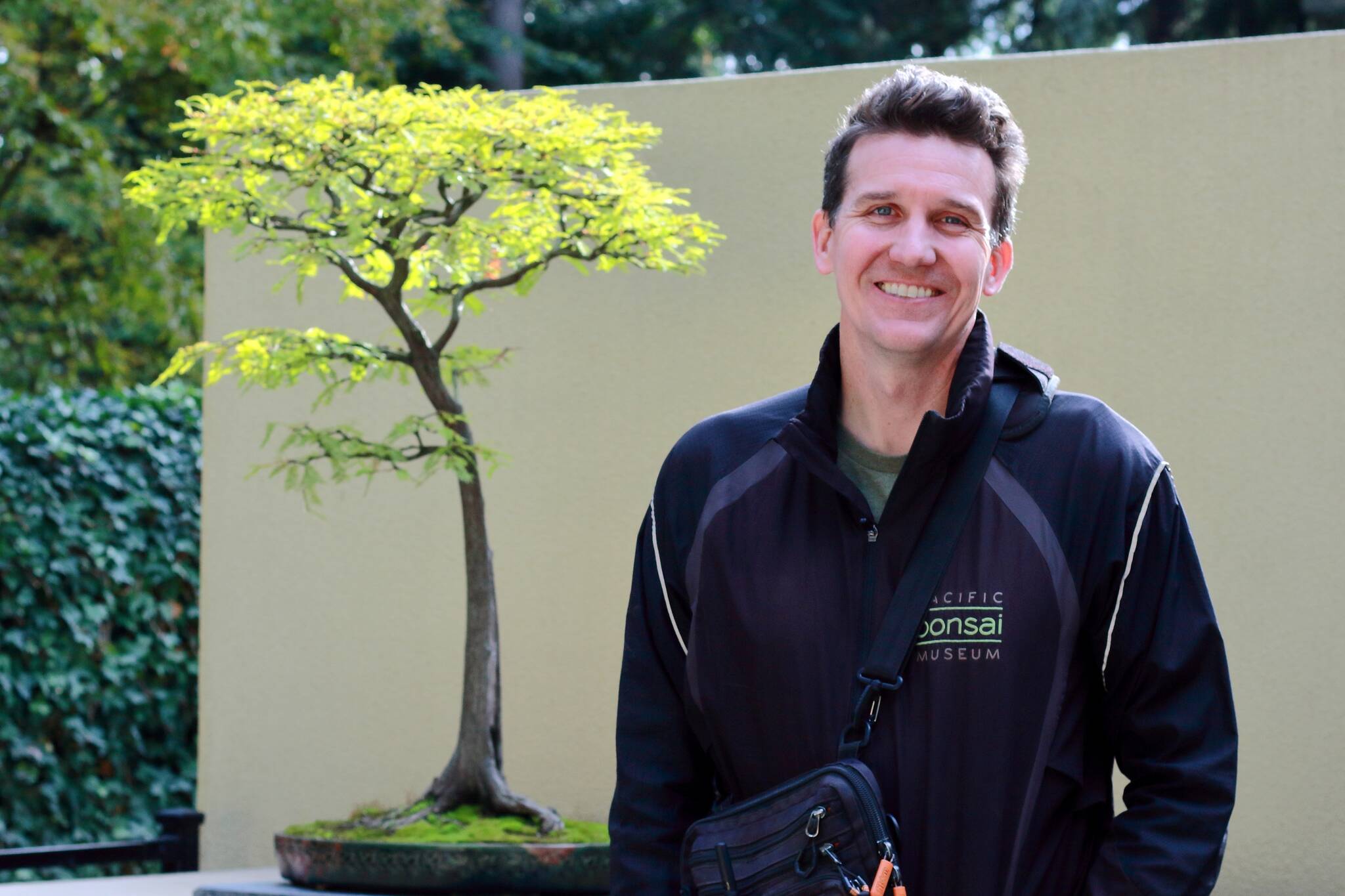
Pacific Bonsai Museum curator Aarin Packard designs the museum’s exhibits and focuses on both celebrating the art of bonsai and providing education through the miniature living trees. Photos by Keelin Everly-Lang / the Mirror
This exhibition “will be the first time that the general public will be able to view the treehouse sculptures outside of children’s hospitals. The exhibition is mounted in partnership with Dave Creek’s Traveling Trees, a non-profit organization established in memory of the late artist, Dave Creek, to bring joy and wonder to children, inspiring curiosity and passion for art and nature.”
The Small Talks exhibit came from collecting the frequently asked questions from visitors and thinking about what it would be like if the trees themselves could respond. He took this a step further and imagined that conversation happening via text, incorporating modern technology colloquialisms and language to express the answers to these common questions.
The next bonsai exhibit is still being created, but Packard is already kicking around his next big idea, which is World Cup inspired.
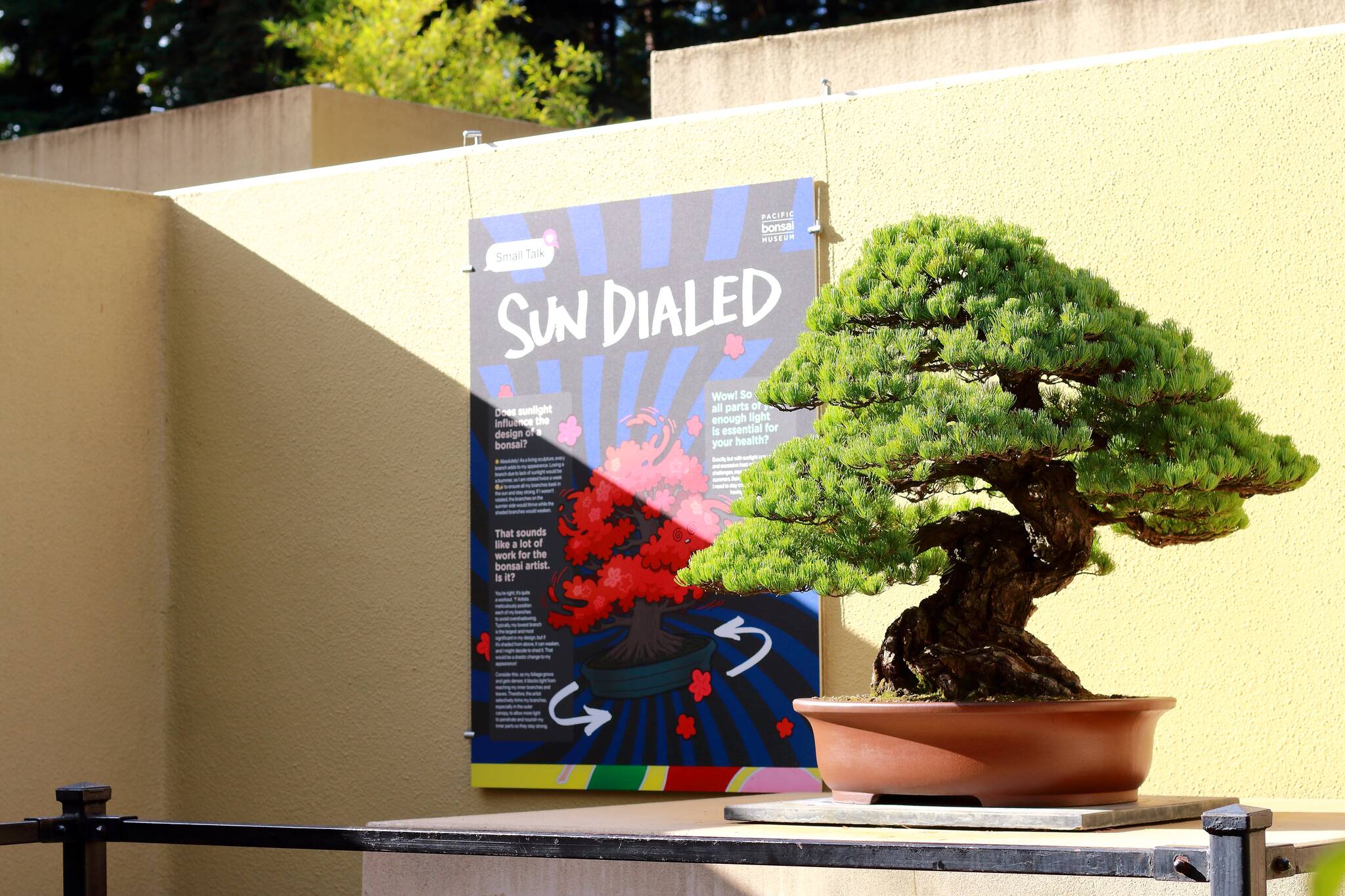
A bonsai soaks up the sun next to a descriptive panel that details the light needs of bonsai at the recently ended Small Talks exhibit at the Pacific Bonsai Museum. Photo by Keelin Everly-Lang / the Mirror
The working title so far is “Bonsai United” and will be an opportunity to connect with people from different countries and explore how culture influences form within bonsai.
This concept ties in with the World Cup, but also is a celebration of the diversity already in Federal Way.
“Bonsai as an art form is largely derived from Japanese culture and the Japanese countries, but like any art, it eventually becomes sort of incorporated into whatever culture is practicing it, so that there’s some kind of authenticity to the culture that is being expressed,” Packard said.
The impact of cultural values on bonsai form has not been widely studied, so to create this exhibit, Packard has been doing research himself by interviewing bonsai professionals around the world.
In the process, he’s explored the balance between the influences of the individual artist, the individual tree and the cultural influences swirling around it all.
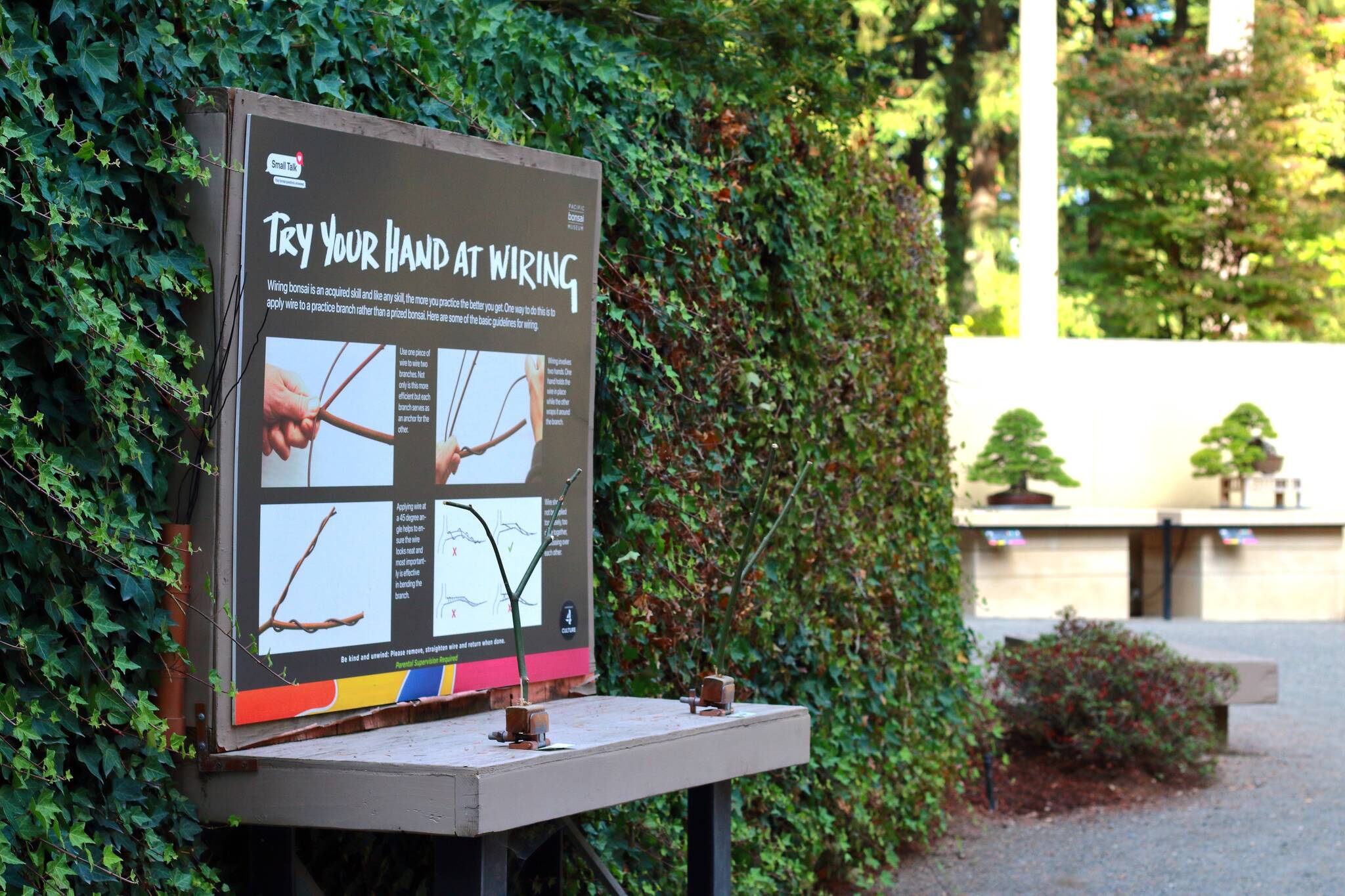
To shape their branches and keep their tiny stature, bonsai trees are wrapped with wire. Guests at the Pacific Bonsai Museum’s Small Talks exhibit got the chance to try working with the wire themselves. Photo by Keelin Everly-Lang / the Mirror
To help illustrate these influences, he encourages readers to close their eyes and imagine a tree. “If you were from Spain, it might be an olive tree, or an oak tree, right? I grew up in Southern California, so I think of a palm tree, right? So our idea of what a tree is is largely influenced by where we’re from, and so bonsai is kind of the extension of that representation of somebody’s idea of a tree, which is largely influenced by these other factors.”
Exact dates for this upcoming exhibit are not available yet, but it will most likely launch around the museum’s busiest time of the year in May 2026, which coincidentally is right before the World Cup.
The biggest event of the year at the Pacific Bonsai Museum is their celebration of World Bonsai Day, which happens to be the weekend before Mother’s Day, which happens to be one of the biggest weekends of the year for the museum’s neighbor, the Rhododendron Garden.
A welcome center and gift shop similar to that of the Rhododendron Garden is scheduled to be built in the next year or so, with a current goal of opening around mid-2027.
• Check it out: The museum is located at 2515 S. 336th St., Federal Way. Visit pacificbonsaimuseum.org.
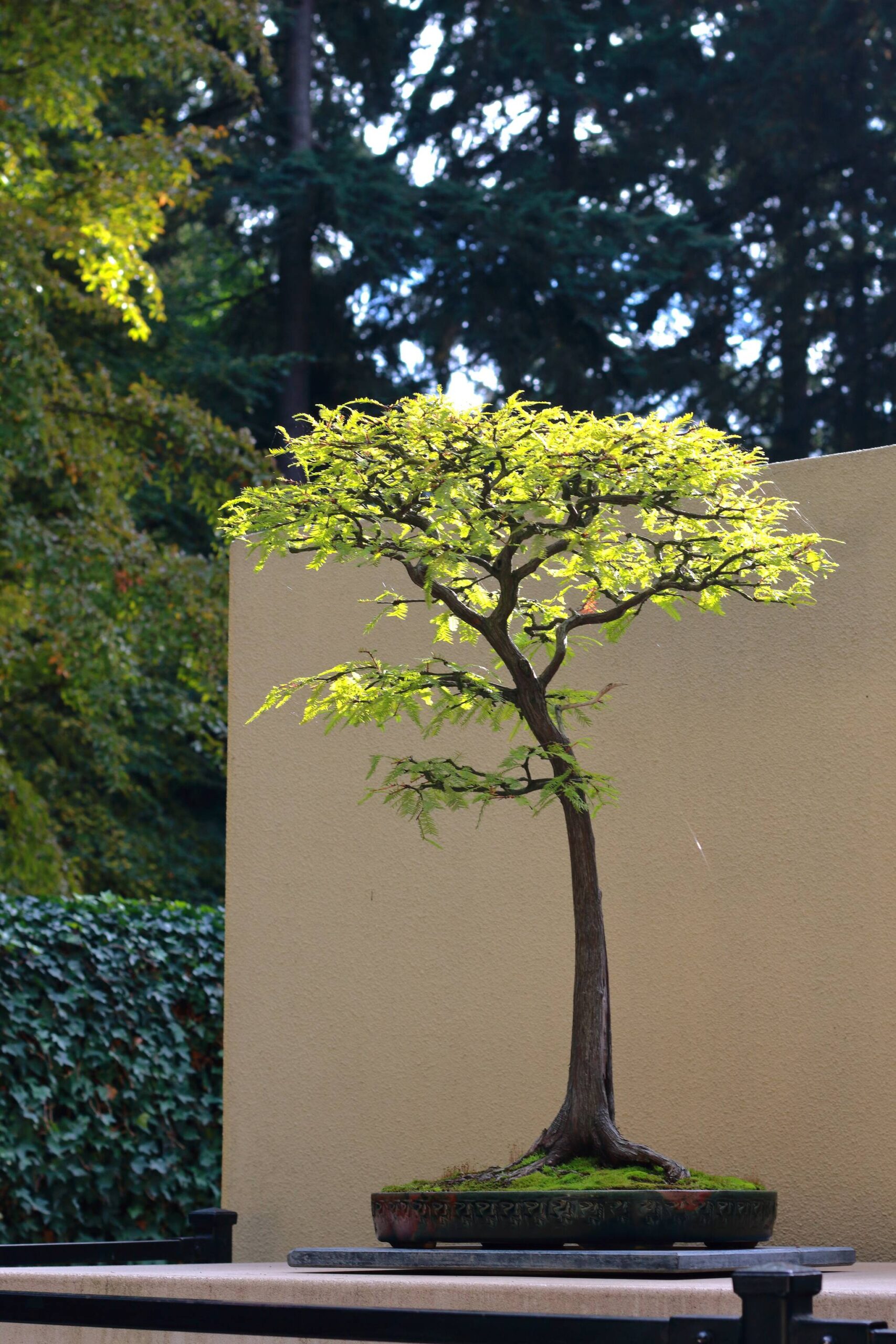
A rare example of a tree that is both coniferous and deciduous, a bald cypress bonsai catches some rays of late fall sunshine at the Pacific Bonsai Museum. Photos by Keelin Everly-Lang / the Mirror
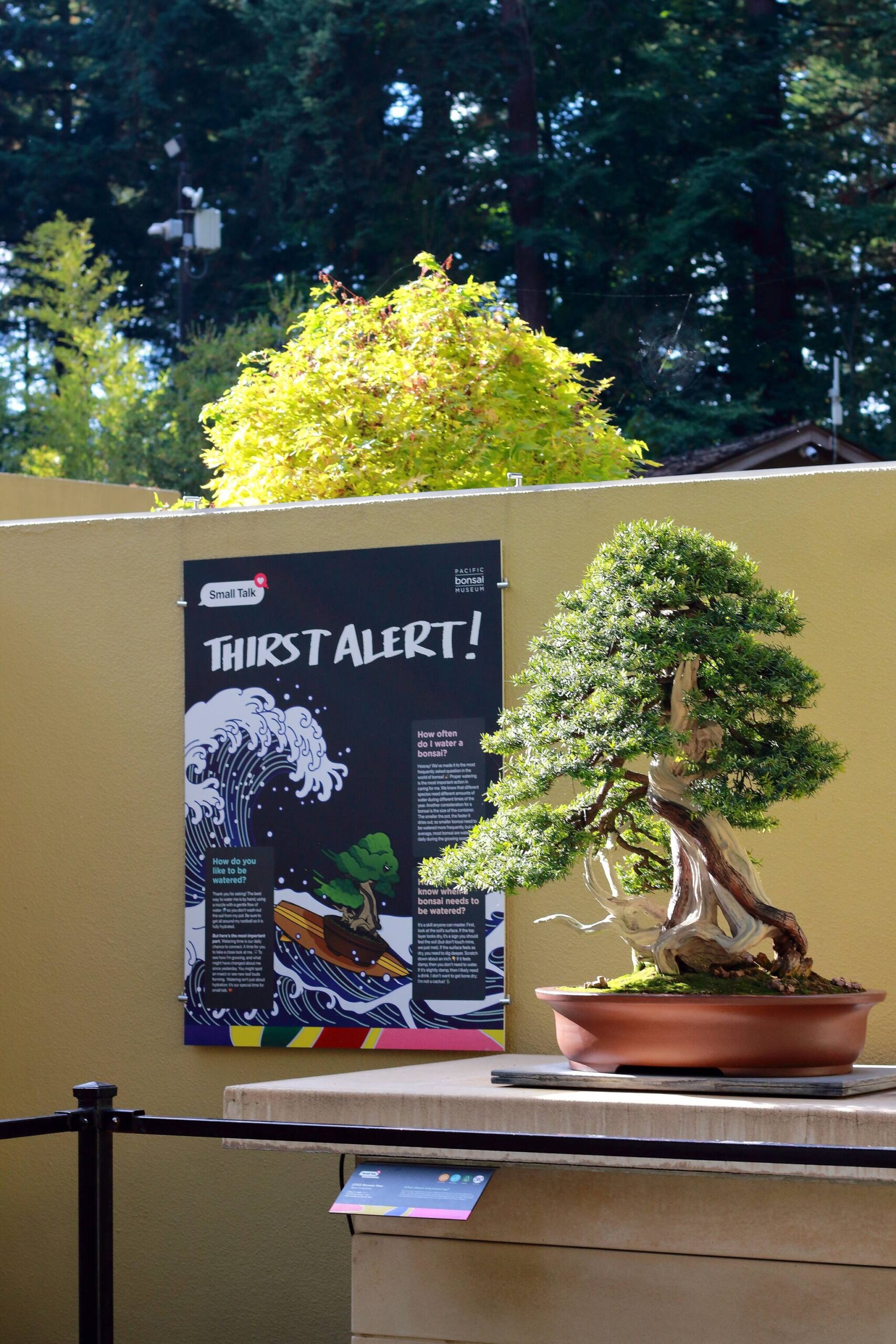
The recent Small Talks exhibit is just one example of the unique offerings at the Pacific Bonsai Museum. Here signage educates visitors about the hydration needs of bonsai. Small Talks has technically ended, but guests might still see some aspects of it if they visit this winter as it is phased out. Photos by Keelin Everly-Lang / the Mirror
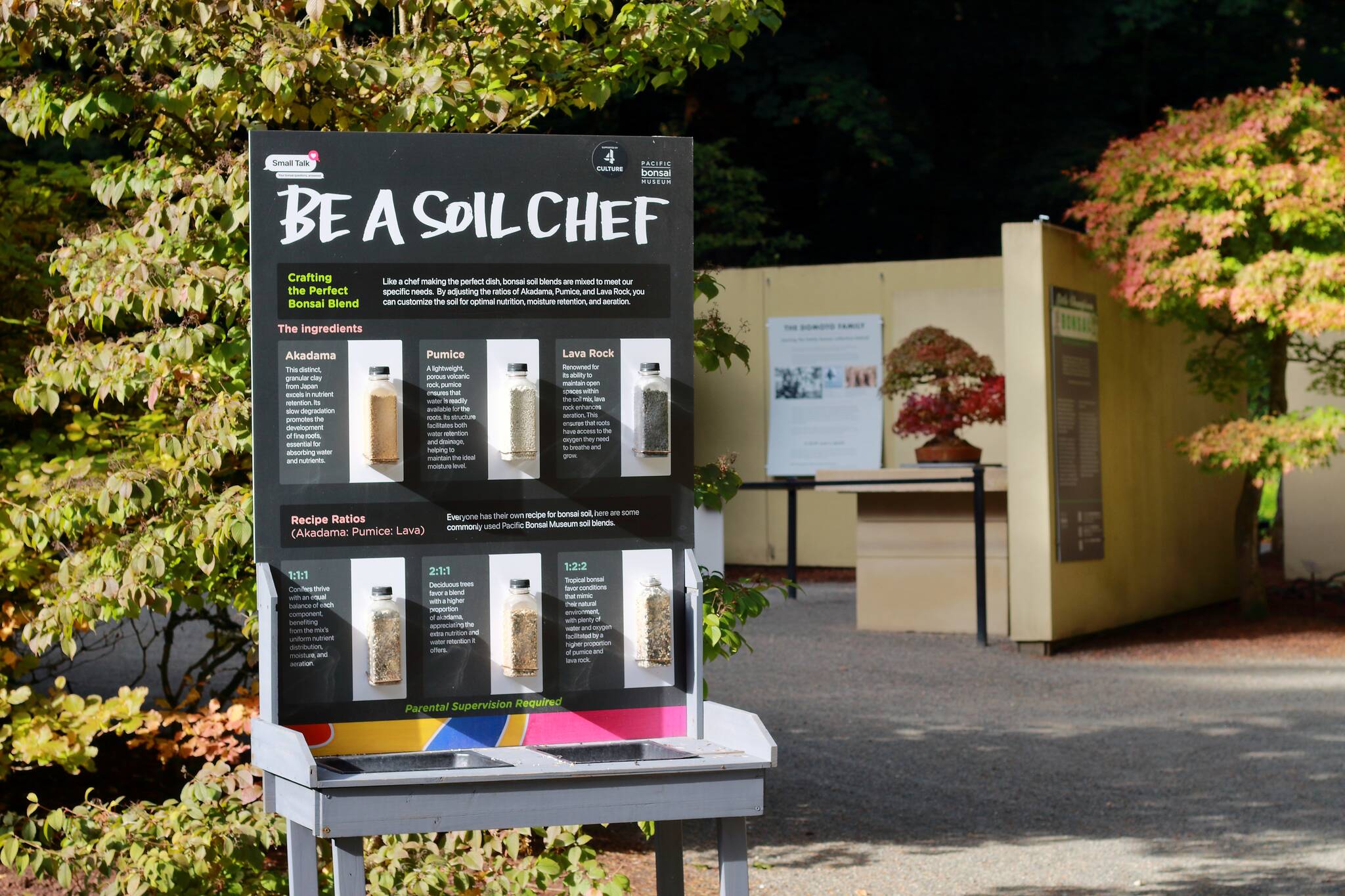
At the recent Small Talks exhibit, educational displays taught guests about horticulture through the lens of bonsai, allowing them to get a hands-on experience with soil and other features. Photos by Keelin Everly-Lang / the Mirror