

24 years after the twin towers fell in a terrorist attack, the community of Federal Way and beyond gathered to reflect on the impact of the tragic event.
Nearly 3,000 people — including 343 firefighters — died in the terrorist attacks of Sept. 11, 2001. On that date, members of the terrorist group Al-Qaida hijacked four passenger jets and crashed them into both World Trade Center towers in New York City, the Pentagon in Washington, D.C., and a field in Pennsylvania.
South King Fire hosts a 9/11 memorial event each year at Station 64, located at 3700 S. 320th St., in remembrance of the terror attacks.
A display of first responders who died in the attack are shown each year, along with permanent monuments of the day.
As previously reported in the Mirror, the memorial was dedicated in 2014 and includes a 10-foot-long piece of steel from the World Trade Center; a stone from the Shankstown, Pennsylvania, the site of Flight 93’s crash; and a block of limestone from the Pentagon in Washington, D.C.
The memorial also includes a stalwart pear tree in tribute to the only tree that survived at Ground Zero in New York City.
On Sept. 11 this year, Federal Way City Councilmember Jack Walsh opened the event with an excerpt of the national anthem, then later led a rendition of “God Bless America.”
This year the event featured speaker Colonel Michael Keenan, who shared a reflection on the meaning of home and the impact of losing the feeling of safety it should provide. Colonel Keenan served in the United States Air Force for 28 years.
“While our nation was mourning, our military was leaving home,” Keenan said. When the towers fell, he was working as a pilot for United Airlines after he had retired from the Air Force.
Keenan shared his memories of watching the attack from the United Airlines mezzanine, then being sent home because all flights had been canceled.
He was then called by his reserve squad to support military efforts across the ocean. At first he would do 26 hour flights, doing high altitude food drops in Afghanistan. He then began landing in the country, landing on remnants of runways to deliver supplies and equipment and pick up wounded soldiers.
Reflecting on this experience of Sept. 11, 2001, and on the impacts of war in general, he spoke about the many ways that veterans return home, and recognized that sometimes they don’t return at all.
Sometimes soldiers return home with “ghosts and monsters,” Keenan said. “Ghosts are the things that have a minor effect, but you still function … but monsters. These are the things that can bring you to your knees. They can drive you away from society. They can drive you to drugs. They can make you homeless.”
Keenan went over statistics around suicide, health impacts and other impacts of war and invited the gathered audience to appreciate those sacrifices on that remembrance day.
Chief Andy Hwang of the Federal Way Police Department also spoke at the event and encouraged the audience to reflect on these sacrifices.
“As we leave here today, let us honor the fallen through our actions,” Hwang said. “Let us celebrate the lives they lived and the values that they upheld together. We can ensure that the sacrifices were not in vain, and that their legacy continues to inspire for future generations. Whether through small acts of kindness or large commitments to service, we can pay tribute to those we’ve lost.”
Federal Way community member and veteran Bob Darrigan told the Mirror that “this was the best ceremony I’ve ever gone to.” One aspect that stood out for him was that the “speeches were filled with the intimacy of the hour” and “made us really look at how bad that really was.”
Randy Williams and wife Randi Weinstein came to the event from Des Moines and said they come every year. Williams is a retired Chief Petty Officer in the Coast Guard who enlisted in 1973.
Like Keenan, Williams was retired when the 2001 attack occurred, but said that watching it happen made him want to get back into active duty.
Weinstein she watched lived in New York City when the twin towers were being constructed and saw them completed the same year she graduated high school.
Years later she said “to see them come down, that hurt.”
FYI
For those veterans and first responders whose service have brought mental health impacts like PTSD and depression, the Veterans Crisis Line is an available resource at https://www.veteranscrisisline.net/get-help-now/chat/ or by calling 988 and pressing 1.
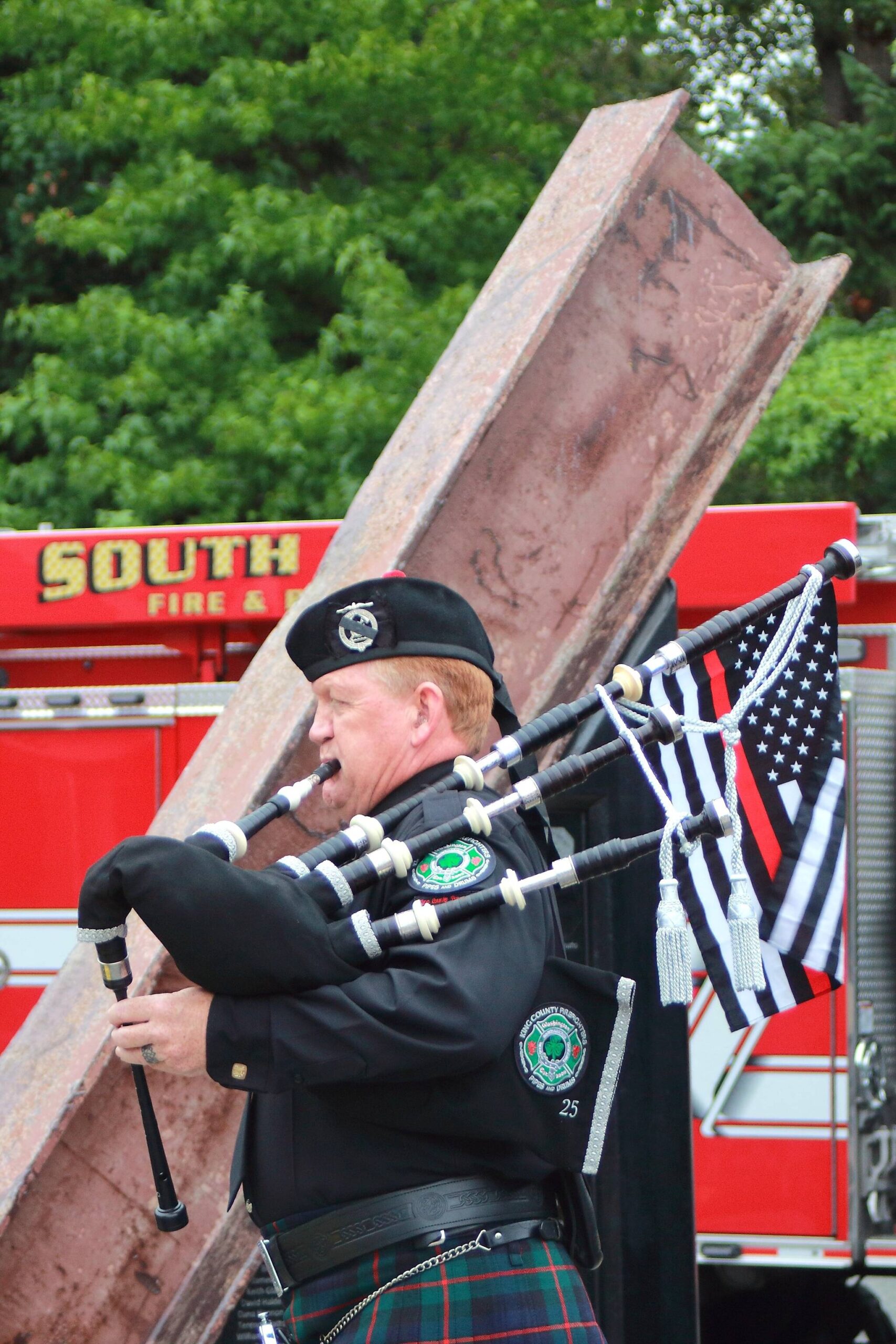
Craig Baughnsmith of King County Pipes and Drums performs at the 9/11 memorial event in Federal Way. Photo by Keelin Everly-Lang / the Mirror
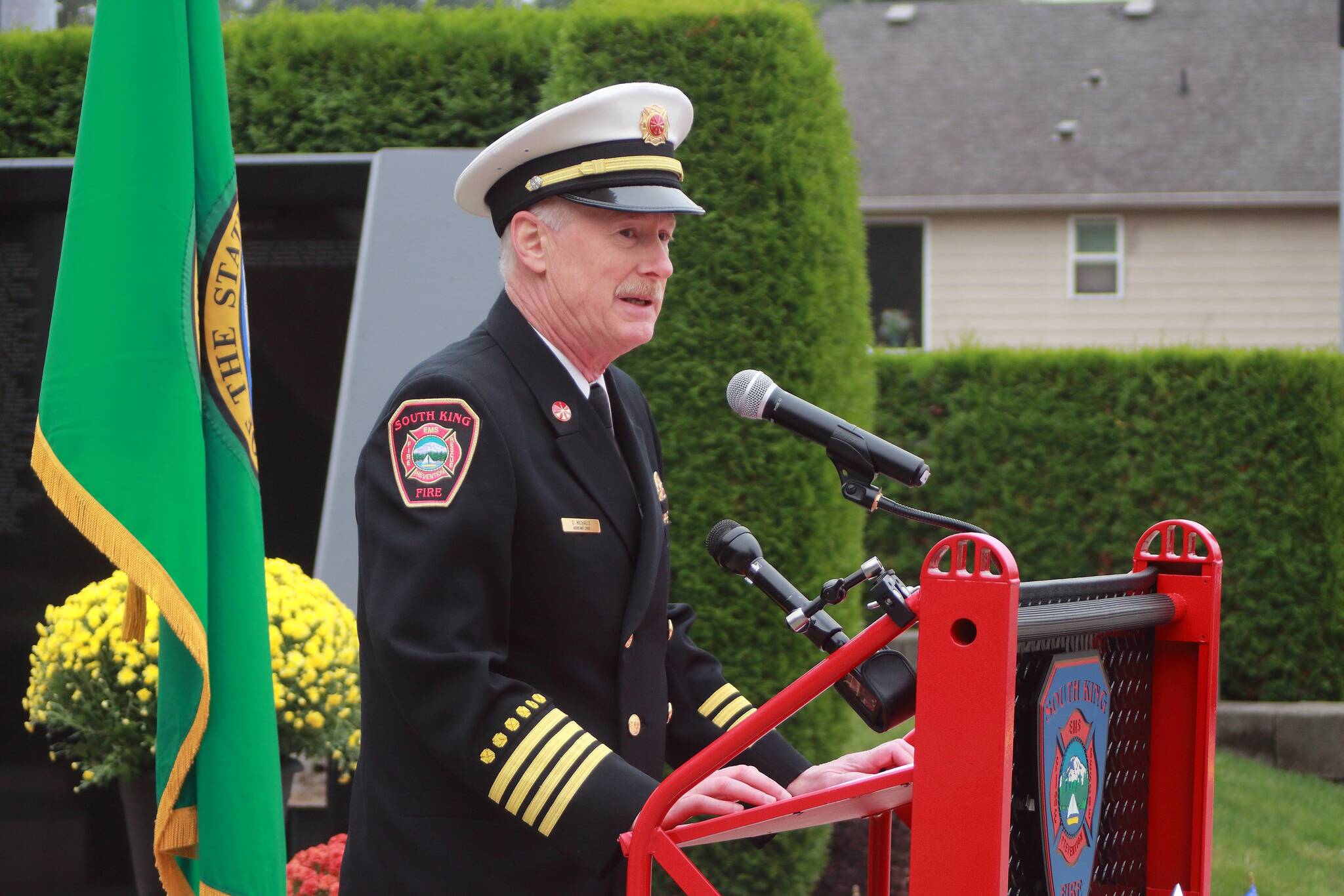
South King Fire hosted the annual 9/11 memorial event. Photo by Keelin Everly-Lang / the Mirror
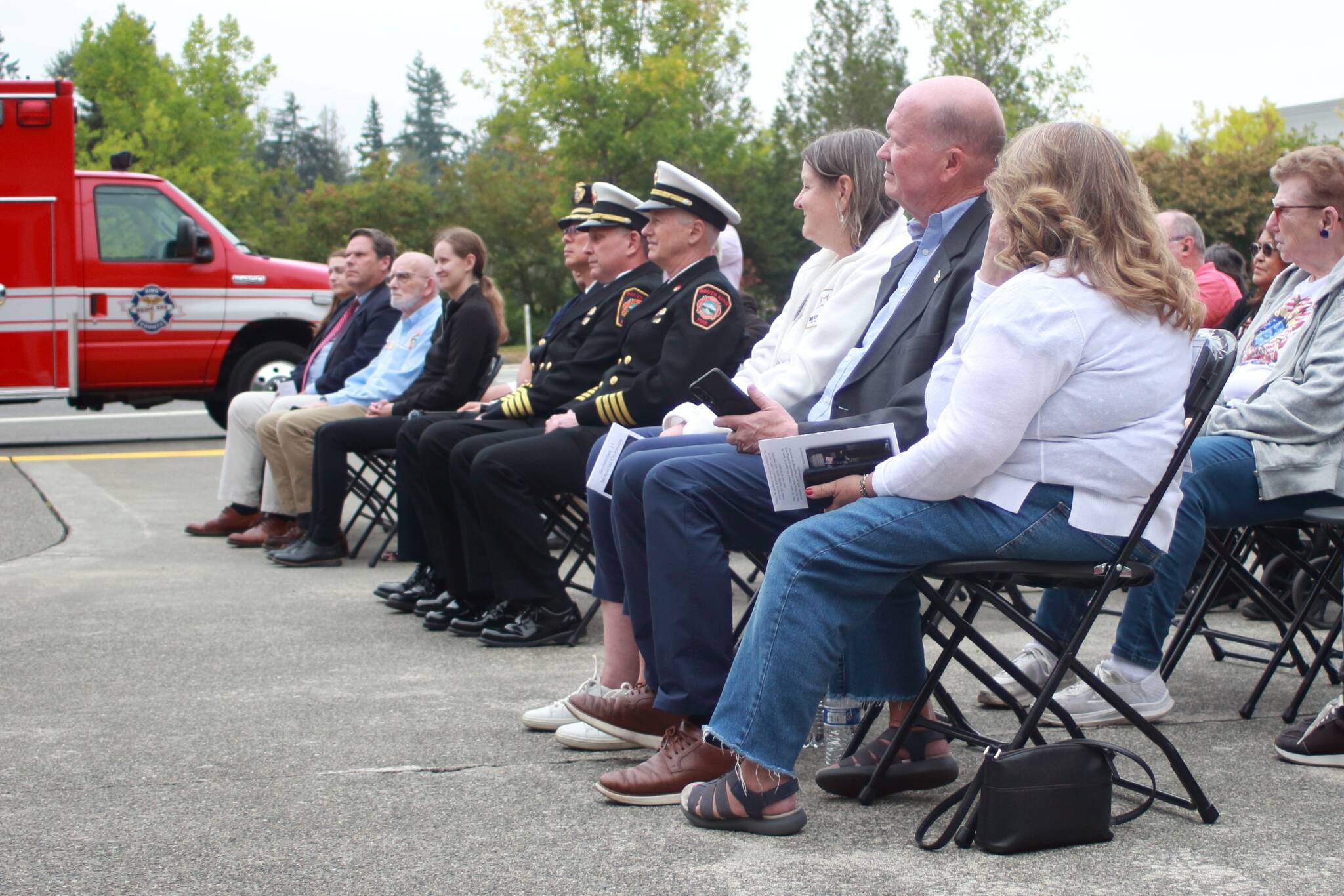
Local leaders attended the 9/11 memorial event. Photo by Keelin Everly-Lang / the Mirror
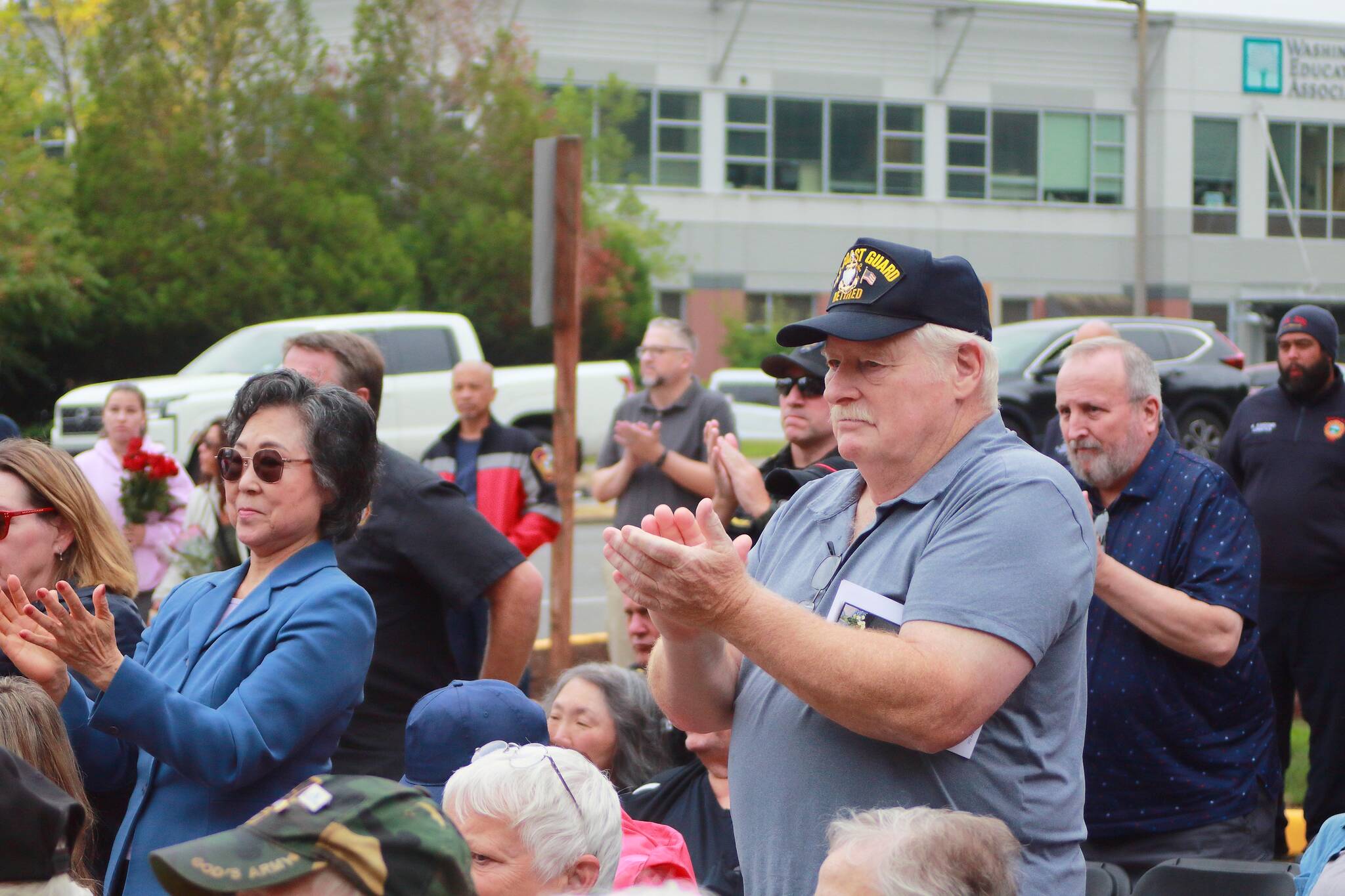
Veteran Randy Williams applauds at the 9/11 memorial event hosted by South King Fire. Photo by Keelin Everly-Lang / the Mirror