FW Community Court carries on despite lack of funding
Published 7:30 am Saturday, October 4, 2025
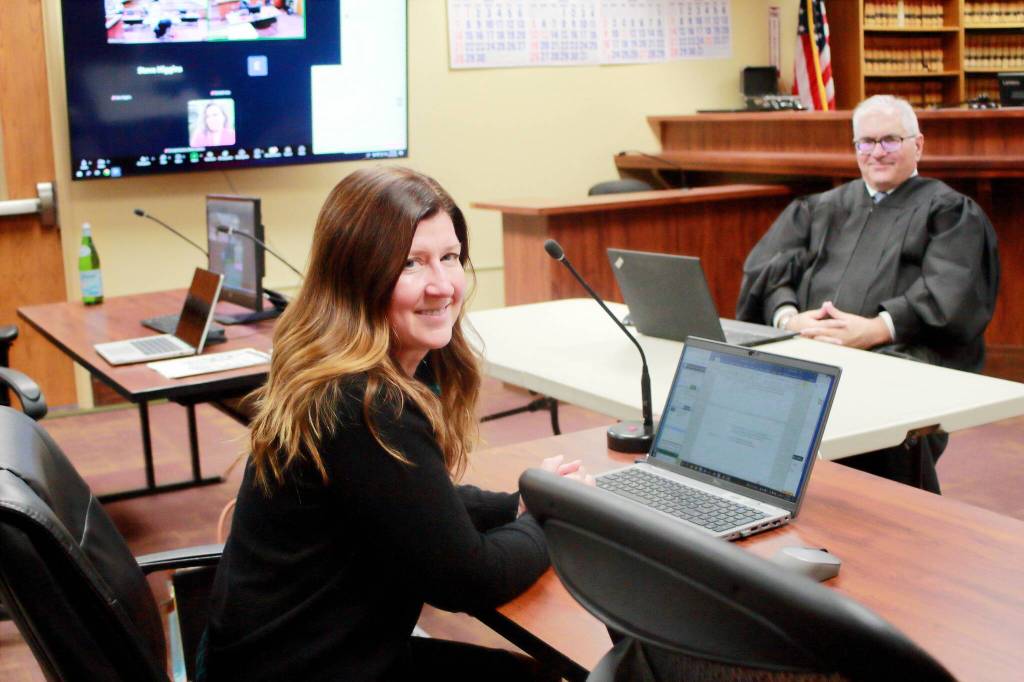
Despite a recent reduction in funding, the Federal Way Community Court is continuing to provide pathways to a better life for people in Federal Way.
The community court began in 2018 and “seeks to reduce the impact on the community by breaking the cycle of crime and reducing recidivism through case management and access to supportive services.”
Until recently, community court was held at the Federal Way Library and was accompanied by a resource center, as previously reported by the Mirror. This resource center included direct access to tools that could help participants make positive changes in their lives, like access to a driver’s license or ID that can help them apply for a job, or access to substance use programs to work toward sobriety, or transportation resources to be able to attend required appointments.
Due to recent cuts, community court has now moved back to the Federal Way Municipal Court at City Hall, and currently does not have a resource center.
Another important aspect of community court is access to a peer navigator, who is able to connect with participants and provide understanding and support in a way that other people in the system cannot. This role piece of the program is still in place, but has been reduced.
The community court itself is a collaborative effort between Federal Way Municipal Court, Federal Way Probation Department, Federal Way Prosecutor’s Office, defense counsel and community partners, according to the city’s website.
At a meeting on Sept. 2, the Federal Way City Council authorized the acceptance of grant funds from the Washington State Administrative Office of the Courts as well as the associated interagency agreement.
The Federal Way Municipal Court originally applied for an allocation of $180,000 out of money appropriated by the Legislature to the Administrative Office of the Courts to be utilized between July 1, 2025, and June 30, 2026.
Instead, Federal Way was ultimately awarded just $85,000.
$80,000 will be used for the continuation of Peer Services with Peer Washington/Peer Community at Federal Way for a position with the title “Therapeutic Court Intervention Specialist,” and the remaining $5,000 will be used for staff training.
This change in funding meant that the Municipal Court lost their 0.6 full-time equivalent (FTE) peer support staff that was reallocated to Federal Way after Des Moines reduced peer support in its court.
It also meant a 0.4 FTE reduction for the resource center and community court coordinator position.
This ended the resource center network that was housed at the library in partnership with the King County Library System. This impact was doubled because losing this partnership meant that they lost the additional peer navigator who was assigned to the library.
Judge David Larson told the Mirror that they hope to bring back the resource fair, but don’t currently have a plan on how to do that.
The municipal court will also lose the entire allocation of the $3,500 for emergency supplies that they have received in past years.
Community court began in the first place because “it seemed like what we were doing was imposing conditions on people that didn’t have the capacity to do it, and then punishing them for not doing it right,” Larson said.
Supports like the peer navigator and the resource fair help make sure that the conditions imposed on people in the court system are actually possible to meet.
“My motto is, I run a repair shop, not a junkyard. What can we do to help that person avoid crime, if truly there’s something else inspiring it, whether it’s addiction, some other behavioral health issue?” Larson said. “Whatever it is, we deal with that particular issue with the hope that they won’t commit crimes anymore.”
This approach isn’t effective for everyone, and only those referred by the prosecutor actually have the opportunity to participate in community court at all. For those that take the opportunities offered to them, it can make a huge difference.
“None of it’s a panacea. None of it’s a guarantee, right? It all depends on the individual desire of the person, and when we’re not ready when they are, that’s where we become part of the problem,” Larson said.
He continued on to share the example of an individual who has been involved in criminal activity related to substance use who tells the court they are ready to get sober, but is told that there are no openings in a rehabilitation facility. In a typical court, that individual would be held accountable for not attending rehab, despite it being outside of their control. In community court, there is an opportunity to work through barriers in order to meet the requirements assigned by the court.
This was the case for current Federal Way community court peer navigator Ashley Pfaff, whom the Mirror chose as a hometown hero in September 2024.
As previously reported, Pfaff said she had tried getting sober a number of ways — going to drug treatment centers seven times, 12-step groups, detoxing in jail. She said she’d tried it all. But what finally aided her in keeping her sobriety for more than two years was the support she received from a peer counselor.
Having help from someone who had been through what she had and made it out was what helped her change her life.
“To hear someone talk about how they did drugs, they lost their kids, they went to jail, they went to prison, and then that they made a life for themselves after that, it gave me the hope,” she said.
Today, Pfaff is still working to help people in community court, and told the Mirror she hopes the resource fair will be brought back in some way.
Even with the changes to services, the community court is continuing to focus on its objectives to:
• Provide opportunities for life changing experiences for participants through intensive case management and delivery of needed services thereby reducing the chance of repeated criminal behavior.
• Increase the success of community re-entry from jail by linking participants to needed services in a structured and deliberate manner via the resource center.
• Increase accountability of persons charged with crimes through restorative justice practices.
• Reduce jail population and reduce jail costs by increasing compliance with conditions of sentence, conditions of release, and conditions of Community Court.
• Decrease the amount of time from the date of offense to the date of disposition.
To learn more about community court in Federal Way, visit www.federalwaywa.gov/page/federal-way-community-court