Stand Up Federal Way hosts meeting about youth psychiatric facility
Published 11:30 am Thursday, May 1, 2025
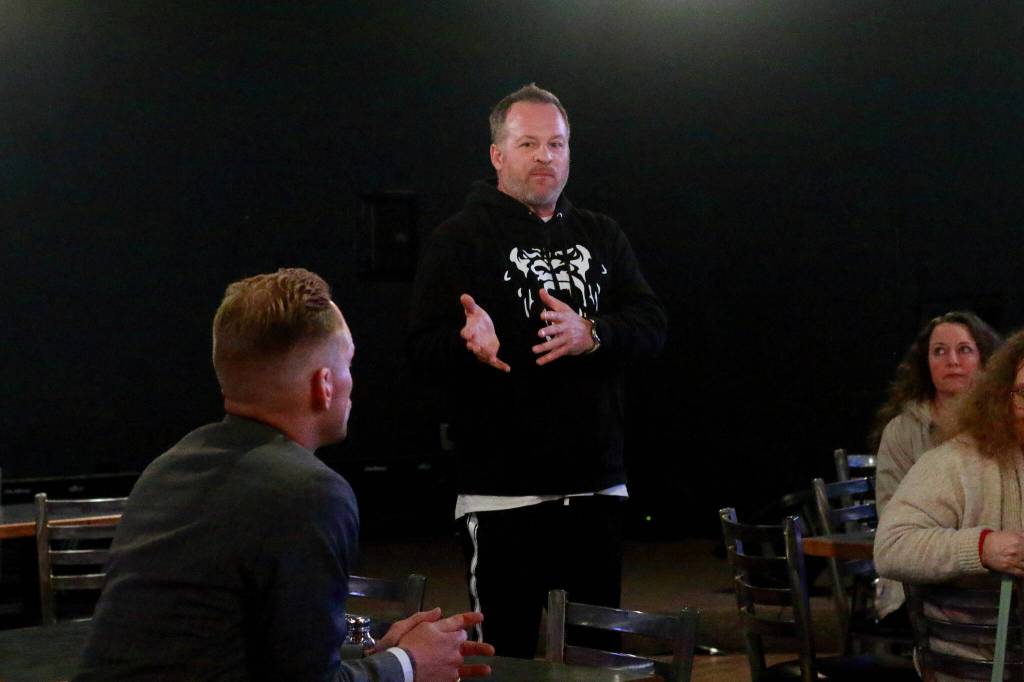
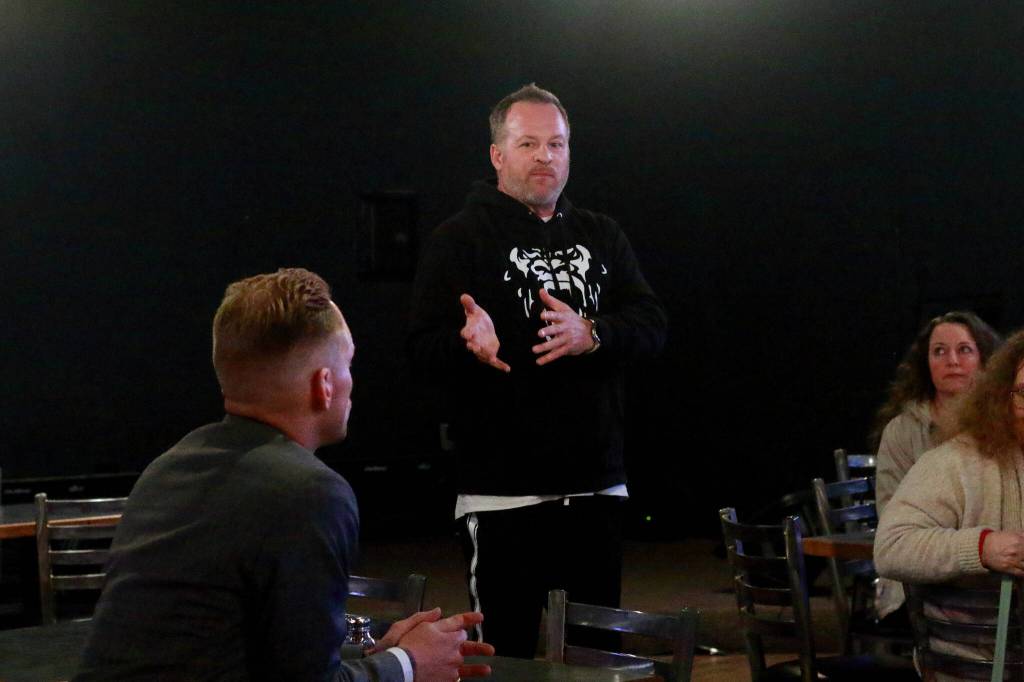
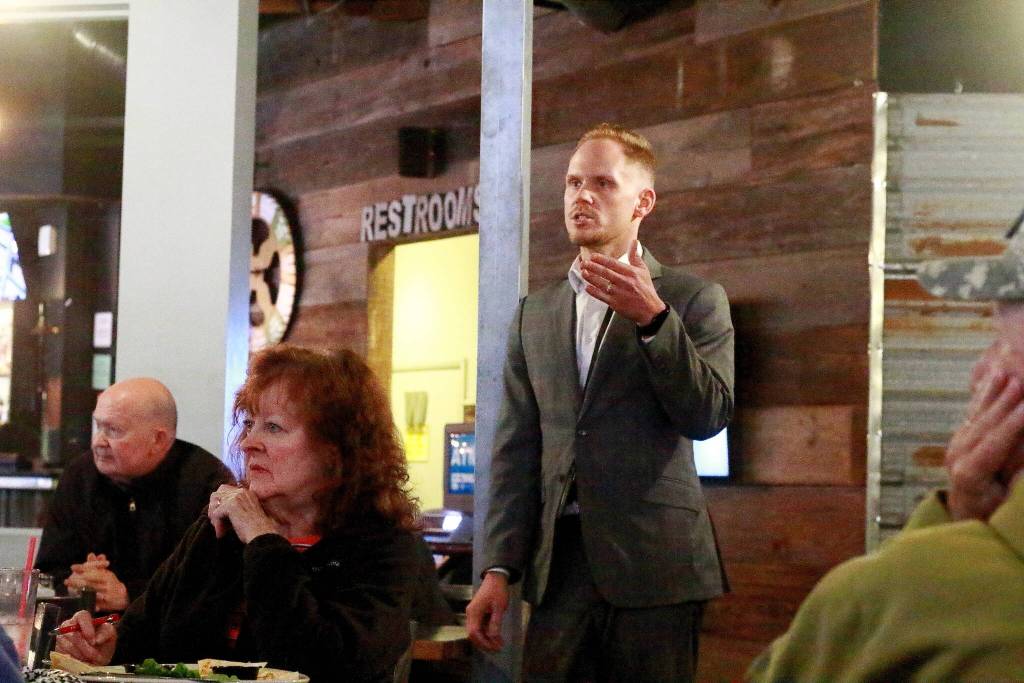


Community group Stand Up Federal Way invited the chief operating officer of the proposed Youth Psychiatric Facility to attend their meeting on April 21 for a Q-and-A session at Billy McHale’s in Federal Way.
Michael Clarke represented Emerald City Behavioral Health (ECBH) and answered in-depth questions about the proposed facility to be located at 822 S. 333rd St. in Federal Way.
Clarke also announced ECBH’s intention to form a community advisory board and an invitation to create a Federal Way Youth Advancement Committee. This second group could be “a collaborative group focused on elevating youth voices and building long-term solutions for care, prevention, and justice,” Clarke said in an email to the Mirror before the event.
The Federal Way City Council passed a resolution on April 15 to support ECBH in pursuing the facility for youth psychiatric care.
The community Q-and-A was a response to a city council decision process that public commentors and even members of the city council called “rushed.” City councilmembers Paul McDaniel, Susan Honda, Jack Dovey, Jack Walsh and Linda Kochmar all arrived to attend the event, but council rules dictate no more than three can attend any public meeting without prior notice to the public because that would be a quorum. Kochmar and Dovey chose to leave in order to keep within the rules. Federal Way School Board Directors Quentin Morris and Joan Marie Murphy were also present.
The discussion
The evening’s discussion was in-depth, and several members of Stand Up Federal Way shared their support for the facility by the end of the event.
Discussion was focused on a list of 54 questions collected from community members by Anna Patrick the night before the event as well as questions from the audience. Clarke brought printed packets of information providing answers to most of these after receiving them less than 24 hours before.
Clarke organized the questions Patrick provided into several categories including: operations and oversight, admission and screening, safety, security and facility design, staffing, programming and daily life, discharge and aftercare, treatment effectiveness and outcomes, community impacts, capacity and financial sustainability and local equity and placement concerns.
As with other discussions of potential operators in the facility, much of the conversation focused on safety.
The facility itself will be the first full-continuum youth behavioral health campus in the state. ECBH is seeking to take the strategies they use at their adult Inpatient Residential Treatment (IRT) facility and apply them in a new way for youth, according to documents shared by Clarke at the event.
The more than 30 attendees also included representatives various organizations like Battlefield Addiction, which included a former Recovery Innovations International (RI) employee. RI was the operator that originally remodeled the facility with the intention of opening a crisis center that ultimately withdrew from the project.
Questions from industry experts were detailed and ranged from staffing ratios and policy to questions about real estate and operational costs. Some answers already included changes made due to community feedback.
“I originally had said it’s going to be a staff ratio of one to four, and then I heard concerns, and now, after looking at our staffing plan, it’s really about one to three,” Clarke shared as just one of many safeguards they have in place.
“For the record, that’s really high,” said community member Dara Mandeville, who has experience in the field. She added that the organization is certified by The Joint Commission, a very high standard in the healthcare industry.
When asked about a timeline, Clarke said they are aiming to be open in the next year or so, but encouraged community members to speak up and apply pressure if they want it open sooner.
“What I will say is this, the zoning folks work for your government. They work for your mayor. So if you folks support it and you want to see it happen … in a year, I could push the team, you’d be surprised what they listened to,” Clarke said.
Who’s running the organization?
Attendees wanted to know more about who is running the organization and what motivates them to do what they are doing.
Clarke shared that the work is very personal to him.
“I came from nothing myself…I think I stopped going to school in about the sixth grade. Spent some years in my own, doing just about nothing,” Clarke said, adding that he had a “welfare mom that tried as hard as she could, so I know what it’s like to be part of a family that tries as hard as you can, and it’s never enough, and for a child to grow up thinking that they’re never enough.”
Co-founder Claudia Johnson wasn’t present at the event, but materials provided by ECBH share more about her story.
Both Clarke and Johnson are passionate about filling in gaps in a mental health system that doesn’t always function well.
Johnson spent time working at Western State Hospital, which led her to open Emerald City Enhanced Services to provide safe and supportive housing for those being discharged from psychiatric hospitals.
Although providing that housing already helped to fill in a gap, she then realized that they were still struggling to access external clinical care. This led her to create Emerald City Behavioral Health to become that clinical care provider themselves.
The organization says the ECBH facility in Federal Way will be another innovative way to fill a new gap, this time taking their strategies from the adult programs and providing that to youth. This approach can help people earlier in their lives to try to get ahead of the trauma, criminal involvement and other harm that can come from not having necessary psychiatric care.
Clarke also described the disagreement on the dais as the council weighed supporting ECBH as a positive, saying “from an outsider’s perspective, they represent you really well. You guys speak out just like they do, and if every time your council gets together, they just agreed, and that’s just how it is…I would question that.”
Expressing the sentiment of many of the attendees that night, Melissa Hamilton said at the end: “I do want to say that a lot of my questions were answered tonight, and I think it’s been really helpful. I think personally, I’m a little more at ease, and I think it’s important to realize that now we just we need to go forward, and we need to make sure that what’s coming to our city is successful, because it’s going to affect a lot of people.”