Man’s thermonuclear fusion reactor draws crowds to Federal Way | What Would it Take?
Published 10:30 am Friday, December 4, 2015
Last month, I walked into a modest home in a Federal Way neighborhood next to Decatur High School and was amazed by what was happening inside.
At a neighborhood meeting, I had heard that there was a thermonuclear fusion reactor in Federal Way. So, I did an Internet search and found the Northwest Nuclear Consortium website (http://lobby.nwnc.us.com/) . I promptly contacted the organizer Carl Greninger for a tour. He gave me his home address and asked me to come at 6:30 p.m. on a Friday.
When my son and I showed up at his house, he invited us into his garage. With modest theatrics, he pulled open his bookshelf to reveal a secret lab behind it. The first room contained the nuclear reactor.
In the adjoining room there was a well-equipped laboratory. Carl gave us radiation meters and gave us a lecture on radiation safety. He had instrumentation all around the reactor to detect any radiation leakage and assured us that there had never been any radiation outside of the one-ton shielding that housed the reactor. Then, it was time to turn on the nuclear reactor.
By this point, several high school students were starting to arrive. A freshman girl, Michaela, had joined us and asked if she could operate the reactor (her first time). We watched as Carl patiently guided her through the numerous steps to fire up the reactor.
After a few minutes of dial turning and button pushing, we saw the glow of plasma on a flat screen TV next to the reactor. It was 300 million degrees — hotter than the surface of the sun. We also started hearing the clicking of the radiation detectors that were instrumented inside the reactor. Wow! Fusion was happening.
But, the truly amazing part was yet to come.
After the reactor demo, Carl invited us to join him in the lecture hall. We went into his basement, which was outfitted with a lectern, spotlights, projector and about 20 classroom-style chair/desks. At 7 p.m., I marveled at the high school students streaming into Carl’s house on a Friday night. They had traveled from all over the Puget Sound. Some came from Mercer Island, some from Sammamish, and, of course, there were students from Federal Way.
I was amazed to hear that there was once a student driving down regularly from Bellingham. I soon saw why. These were extraordinary students. And Carl was providing an extraordinary experience.
He requires his students to study materials on chemistry, physics, engineering, instrumentation, materials science, mathematics, nuclear physics and more. He requires them to use the material published by the Department of Energy. The students need to pass exams on these subjects within their first year in the program.
When Carl took his place at the lectern, the 20 or so high school students respectfully quieted down and gave him their attention. Carl welcomed new students to the program. To every student, he gave a color-coded name badge (the color indicating which exams the students have passed), a white lab coat and a personal device that tracks radiation exposure that was to be worn always.
Carl told the class about new equipment that came in that week, then gave the microphone over to another student who was about to conduct some experiments. This student had machined by hand a metal contraption that he was going to use inside the reactor to conduct some experiments. He was a high school student discussing some nuances of machining that I didn’t learn until my senior year engineering courses at a university.
Carl dismissed the students, and they all stood up and excitedly walked into the lab. Michaela stayed behind and remained as a host to us. She asked if we had any questions or if we would like her to continue telling us about the lab. I asked her a few questions as we proceeded with her tour. I couldn’t believe I was talking to a high school student. During the course of the conversation, she talked about what a privilege it was to be in this program with Carl, the other adult volunteers and the incredible group of students.
As I have reflected on this experience, I think the fusion reactor was pretty awesome, but it was the students and what they were doing that was truly amazing.
Carl, an IT manager at Microsoft by day, had a vision of a private science club to teach students “real science.” He turned his vision into a Friday night program that attracts the brightest minds in the region. Adult volunteers, who are experts in biology, electrical engineering and software engineering also attend the Friday night meetings.
The result is a long list of wins and accolades at the highest level of science competitions. In 2015, this little club that meets in Federal Way won 14 first place trophies at the Washington State Science and Engineering Fair, hauling in over $250,000 in scholarships. They attended the International Science and Engineering Fair and were awarded fourth place among 72 countries.
I hope city officials, teachers and school administrators are paying attention. Our city is spending millions of dollars on new schools and event centers with hopes that it will invigorate our city and draw middle class families.
As our city leaders are pondering these goals, they should reach out to Carl, get a tour of his lab and see what he is doing with his students. If anyone wants to see a program that is currently drawing incredible people into our city, this is a must see.
We should be asking ourselves — what if there were a few more of these programs — and suddenly there’s an influx of students and families applying to get into a variety of Federal Way clubs? Should we be thinking about how the city and the school district can help incubate, support and fund these types of organizations? Could community organizations like the Kiwanis, Rotary, Lion’s Club and our various church organizations help?
This is also a call to private citizens. If there is one lesson I learned from seeing Carl’s program, it’s that we don’t need to wait for our city government or our school district to do things we want done for our children. Carl is using his own home and his own money to run the entire program.
He showed me that you can use your God-given gifts, your occupational skills and your own resources to invest into our kids and our community. Whether you’re an engineer, a financial advisor, a machinist, a mechanic, or a teacher — you can make a difference in our community if you have the will.
Thank you, Carl, for all you’re doing. Thank you to all the volunteers who are showing up and dedicating their time to the program at Carl’s home. Thank you for inspiring us and showing us what can be done to make our community great. Thank you for creating a program that draws some of the brightest minds in our region to regularly commute into Federal Way on a Friday night.
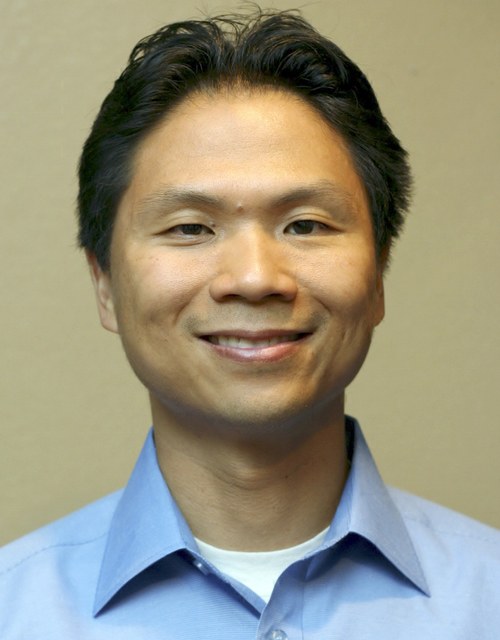
Don Hyun is a longtime resident of Federal Way. If you have thoughts on how Federal Way can recruit your business, contact him at donhyun@hotmail.com. Join the LinkedIn group of technology workers in Federal Way to show employers that there is a great pool of tech talent in the area at www.linkedin.com/groups/Federal-Way-Technology-Workers-Association-8288052/about