Thomas Jefferson robotics team advances to district championship
Published 3:38 pm Friday, April 3, 2015
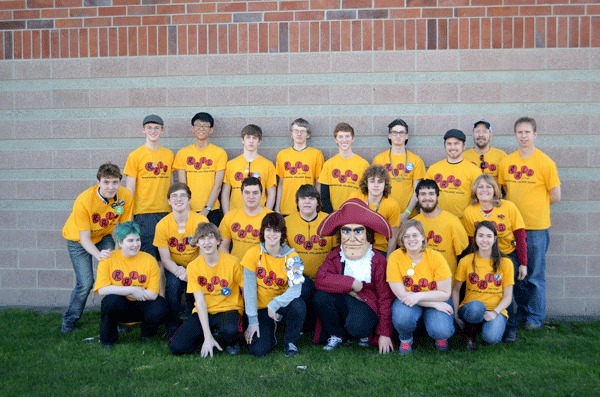
Thomas Jefferson High School’s robotics team has already achieved a lot this year by making it to the FIRST (For Inspiration and Recognition of Science and Technology) Robotics Competition Pacific Northwest District Championship in Cheney from April 1-4. Now they are looking to go further.
The team is known as RAID (Raiders Artificial Intelligence Division) and it has made a lot of progress in its relatively short existence.
The program was started just three years ago by Thomas Jefferson teacher Shawn Timulak. Many other programs in the state have been around much longer.
“Each competition we’ve been in, we have gotten better,” said team mentor Tod Byquist.
Byquist has been with the team all three years of its existence. He has a background in the tech industry, more than 20 years of youth coaching experience and a son in RAID, making him a natural fit.
The team competes in the competition, which features students in grades 9-12.
For Inspiration and Recognition of Science and Technology is the organization behind the competition. There are over 55,000 students involved in the competition across the United States.
Each year, the Thomas Jefferson team faces two challenges: the actual competitions and funding.
Every year the robotics team has to build a different robot for the competitions and the game is always different for what they must make the robot do.
Students receive instructions on what they must build the robot to do on the first Saturday in January. They then have six weeks to complete the robot by building and programming it.
At the six week mark, every team across the nation is cut off from doing any more work to the robot. The next time they interact with it is at their first competition.
During the RAID team’s first year, they had to make a robot that threw frisbees. The next year it was rolling medicine balls. This year it is moving and stacking shipping totes and trash cans.
The robot is limited to being built 3 feet wide by 2 feet long and 6 feet tall. The weight limit for the robot is 120 pounds.
The teams acquire points by completing the tasks at the events. They switch partners throughout the two-day qualification period. Teams with the highest scores advance to the next round.
This is the first year that Jefferson’s team has made it this far. They rank 15 out of the 152 teams in the Pacific Northwest region.
Funding the team is expensive, but the team leaders believe the benefit is well worth it for the students who participate.
“It gives young scientists a place to realize what engineering is about,” Byquist said. “And it also helps them learn what it’s like to run a business as well. It helps them to define what they want in life.”
The students on the team help budget for the team as well as build and program the robot.
The program costs around $12,000 a year. The robot by itself costs around $4,000. Sponsors such as Boeing Co., Intel and the Raider Parent Movement provide much of the funding.
For the upcoming trip, the team had to plan out a way to raise money in one day. They were successful, but are always looking for more sponsors to make fundraising less stressful and keep the program afloat.
“It was amazing we were able to fund it,” Byquist said.
The team is not gender specific and any student can join even without experience. They are also always looking for more mentors.
If the team were to advance past this week’s competition, they would earn a spot in the national championship at the Edward Jones Dome in St. Louis, Missouri from April 22-25.
More information about the team can be found on their website, raidrobotics.org

RAID’s robot, No. 4469, completes the task of carrying and stacking shipping totes and a garbage can while three members of the team guide it.