Federal Way grad Dawson creating bright future at Gonzaga
Published 10:53 am Friday, August 12, 2016
“Difference is normal.”
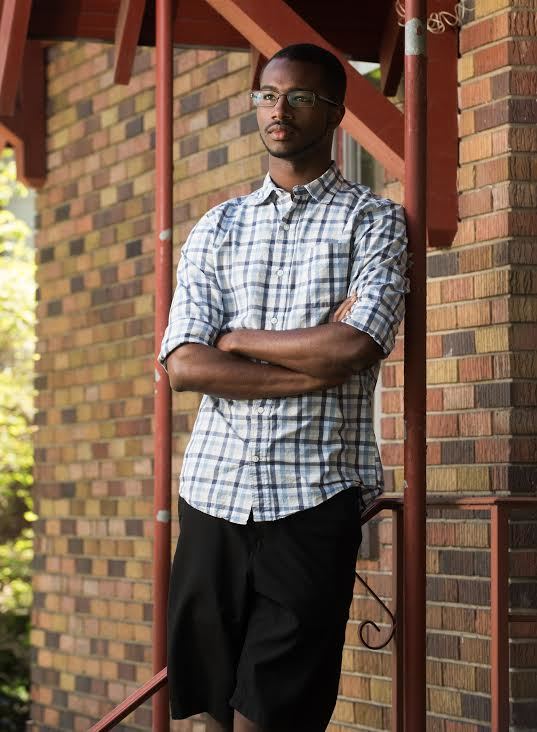
That’s just one of many messages Federal Way High School alum Caleb Dawson is using to leave his mark on the world. It’s a state of mind Dawson lives and operates by, and it’s one that has allowed him to travel to different cities and countries to share this message with others.
Actions like working hard to be one of 100 students around the country to be selected as a fellow to study Public Policy and International Affairs at the University of Michigan’s Gerald R. Ford School of Public Policy. Like entering college as an Act 6 scholar. Like serving on a council for Equality, Inclusion and Intercultural Awareness, and being one of the brain trusts behind the program “Gonzaga Scares Hunger,” which allows him to travel and share his message. It’s also helped Dawson earn the position of president of the Gonzaga University Student Body Association entering his senior year.
Since he can remember, Dawson has always had a passion to help others. Dr. Joshua Armstrong, the head of Gonzaga’s Comprehensive Leadership Program, said Dawson’s desire to put others before himself is immediately evident.
“If you’ve never met Caleb before and you sat down and had a cup of coffee with him, you would immediately get he has a sense of eagerness to talk about important issues affecting others,” Armstrong said. “He is so deeply interested in connecting and making relationships with others. It’s just who he is.”
Dawson said his passion to put others before himself really kicked into overdrive during his time as a Federal Way High student. It was there he got involved with Advancing Leadership Youth, which allowed him to explore event planning, and through that he became exposed to all corners of the city.
During his senior year, Dawson got full exposure to the city’s youth demographic when he helped lead We Day. His initiative during the event spread the word and made his name a hot commodity.
“That really widened the audience of who I got to lead and who I got to work with,” Dawson said. “From that, people got word of the work I’d been doing and I got connected with more people, and from there it was just connecting the dots to things I was already doing that allowed me to share things throughout the Federal Way community.”
Since leaving the city for Spokane, Dawson said it’s the normality and inclusion of diversity he misses most about his home town. Since starting school at Gonzaga, Dawson has returned to his alma mater on multiple occasions to visit some of his favorite classes — despite his hectic schedule, he found time to return as recently as May.
During that visit, he visited a former class, which happened to be a personal favorite, and was met with an immediate sense of that inclusion.
“Before the teacher even introduced me, she made an announcement that she would be translating her introduction in Spanish for one of the classmates,” Dawson said. “That just made me so happy — how diverse Federal Way is. Not only with different ethnic groups, but different languages.
“That someone could come to our school from a different community that doesn’t speak English and feel included, but to also have other students who can translate to their peers… that’s that metropolitan diversity that I cherish most about Federal Way.”
Dawson found his way to Gonzaga through the Act 6 Scholarship, which is given to emerging urban leaders chosen to receive a full scholarship based on leadership, academics and commitment to service. It was the university message of “education for the whole person” that sold Dawson on Gonzaga as opposed to schools on the west side of the state.
He said it resonated with him because he felt university officials wanted him to develop in every way possible. Dr. Judith Biggs-Garbuio, the university’s vice president of student development, said it’s evident with Dawson that, once he educates himself on something, he always makes sure to share that knowledge with others.
“Caleb is really good about finding something that is missing and developing a program to fill that need,” Biggs-Garbuio said. “And for him, there is no reward required. It’s to help strengthen the student experience.”
Once on the Gonzaga campus, Dawson’s star rose swiftly. He got connected with student development to help promote campus diversity by launching the Gonzaga Scares Hunger food drive, where Dawson gathered a group of students to go trick-or-treating for canned goods to donate to families in need.
The event was a success, and the group raised upwards of 400 pounds of food.
Dawson was appointed by Gonzaga President Thayne McCulloh to serve on the University Council for Equity, Inclusion and Intercultural Awareness, which works to “help ensure students, faculty and staff feel affirmed and valued.”
His resume, in addition to his infectious personality, won him the student body presidency in the spring of 2015.
“I think the students resonated not just with his overall personality, but with his campaign platform,” Biggs-Garbuio said.
Dawson also spent five months studying abroad in Chile in 2015. Initially, Dawson said he was prepared to experience the country as just a vacation-like paradise, but he said he learned to appreciate the Pacific Northwest through all the breath-taking sites in the South American nation.
“It prompted me to think, ‘Wow, why don’t I do things like hiking or skiing here?'” Dawson said. “It reminded me of how blessed I am with the opportunities I have here and that I should take advantage of them.”
The experience also forced him to adjust his perspective. Dawson noticed how patient and encouraging Chileans were when his Spanish was a little off or even entirely incorrect.
“I was concerned with how articulate or intelligent people thought I was since I couldn’t communicate as well in Spanish as I could in English,” Dawson said. “But then I realized, ‘Wow, how often do I judge people based on how well they speak when that’s not necessarily indicative of their intelligence, like it was in my case?’ Making sure to give people grace in the way people express themselves.”
After returning from Chile, others could readily see the changes in Dawson.
“I really noticed a difference in him,” Armstrong said. “It had a real impact on him and his ability to connect with diverse students.”
When Dawson graduates in the spring of 2017, he said it’s likely he’ll continue on to graduate school. First, though, he’ll spend five months in the Emerson National Hunger Fellows Program, which addresses poverty in the context of social inequality. Dawson will then be placed in the field to gain experience before doing consulting and policy analysis work in Washington, D.C.
What he does after graduate studies and the fellowship is still up in the air.
Dawson said he’s leaning toward a career in civic engagement or community organizing, but added that working abroad or on student development in higher education is not out of the question either.
While he has yet to set a specific career path in stone, it wouldn’t be a surprise to find Dawson making difference normal in Federal Way.
“That’s home. That’s my community,” Dawson said. “I definitely have a strong affinity to continuing this work in Federal Way, since that’s home and that’s what sparks my consciousness about these issues. So I see Federal Way as the place I could do that long-term.”