Makeover of Federal Way’s historic cabins begins
Published 5:20 pm Tuesday, July 8, 2025
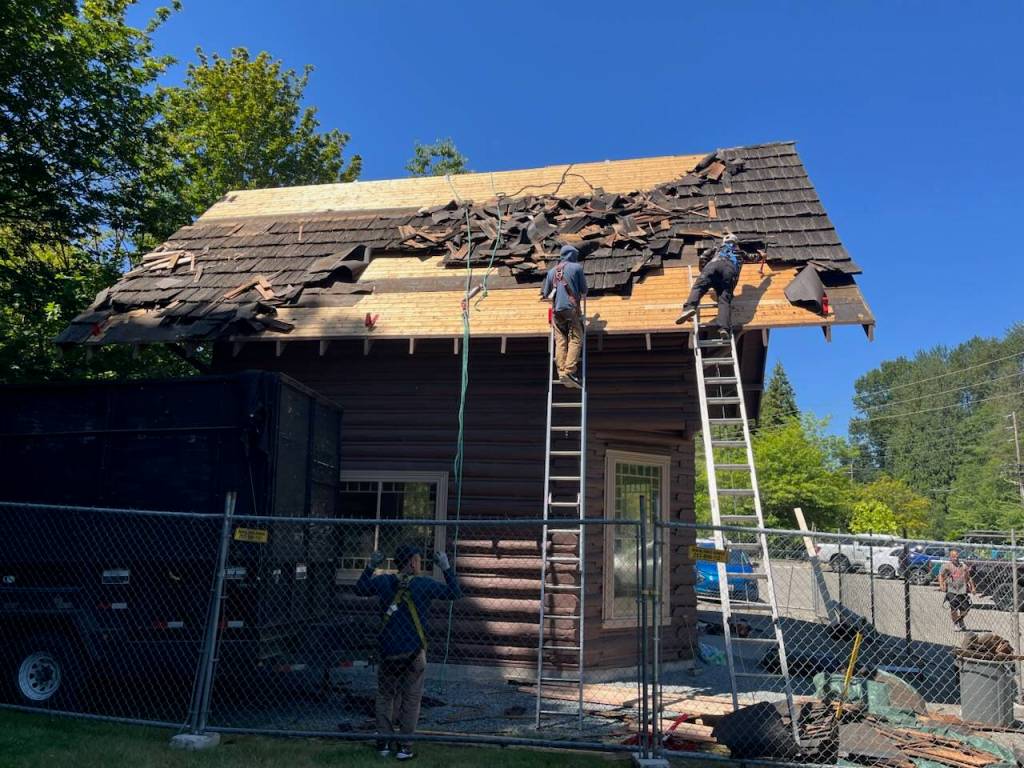
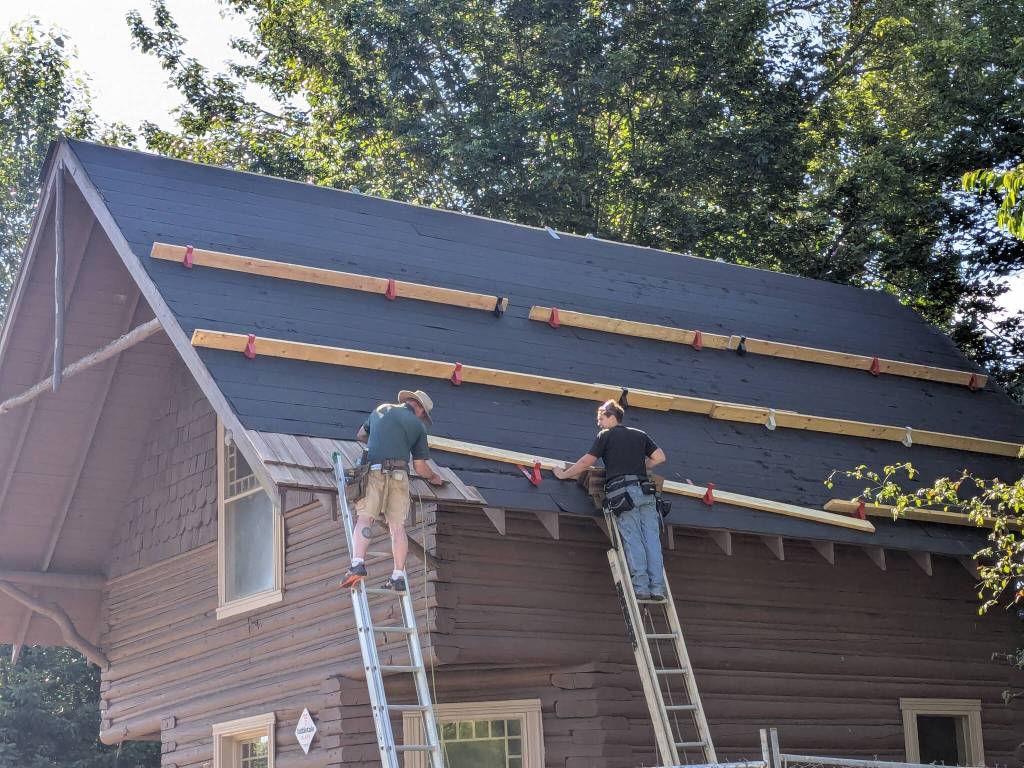
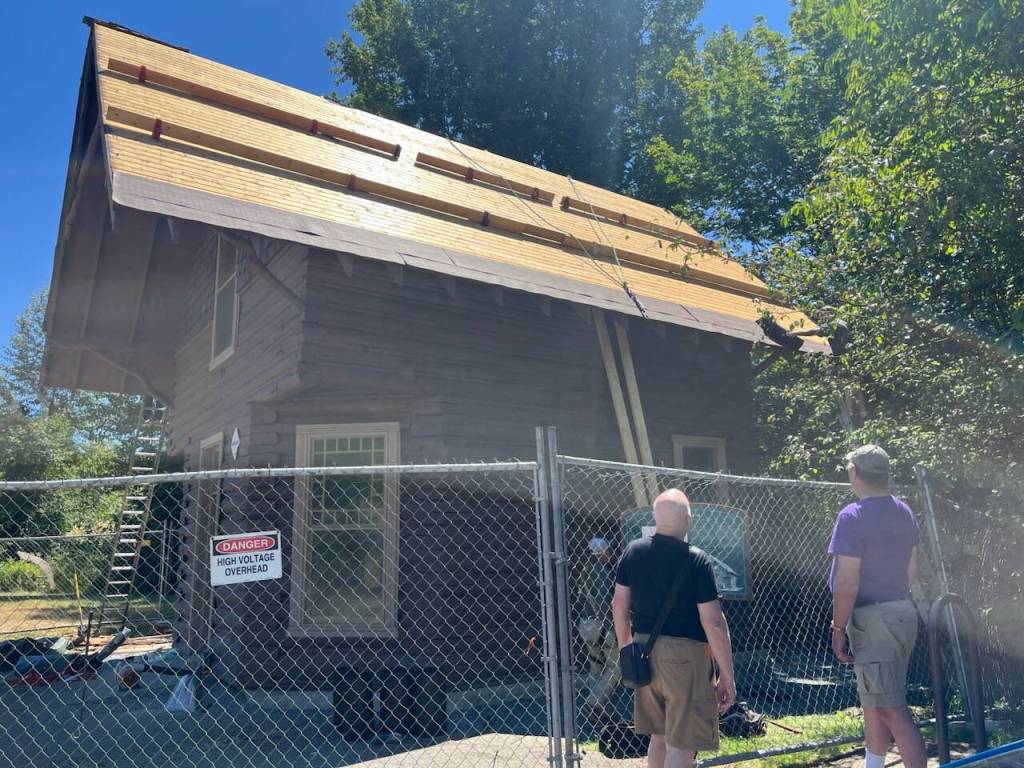
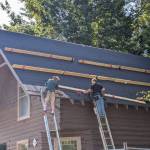
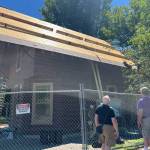
The Denny and Barker cabins that watch over the entrance to the West Hylebos Wetlands Park in Federal Way are getting a needed refresh.
Guests visiting at the beginning of July saw an unusual flurry of activity around the historic structures as the Denny Cabin received a new roof.
The board of the Historical Society of Federal Way said the “roofs have run their course and need replacement before any water damage is done.”
The replacement of the Denny Cabin roof began on June 30 and continued over the next two days. The Denny Cabin was focused on first because it was in worse shape, and because it is a less complex and challenging replacement project.
This Denny Cabin roof was 23 years old and consisted of plank decking, tar paper and cedar shakes. While historic accuracy is important, the cabin is not eligible for historic designation due to it being moved far from its original location in Seattle, which does relax the requirements for its replacement.
“We were fortunate to have a very reasonable fee for the replacement from a local roofing company, Horizon Roofing, that was replacing the cedar shakes with a similar product,” Historical Society President Jerry Knutzen told the Mirror.
When the contractors began to remove the shingles on the Denny Cabin, they found a happy surprise in the condition of the decking underneath. As Knutzen explained in a follow-up email to society members, “to the credit of the cedar shakes and the craftsmanship of those who last reroofed the cabin, the underlying decking is in excellent condition and looks essentially new.”
Modern roofs often utilize sheet decking, which is made of plywood, but the last replacement used more historically accurate plank decking instead, which is also longer lasting, Knutzen said.
Now that the installation is complete, Knutzen said the new cedar shakes are expected to last another 30-plus years.
The Barker Cabin roof will be a bit more challenging to replace due to its eligibility for historic designation, which the historical society plans to pursue. The last roof was installed by a volunteer group in 1997 using historically accurate techniques.
Twenty years ago, volunteers “split the shingles from cedar bolts and properly nailed the shingles that have kept the rain and storms from doing any damage to the structure,” the society shared in its winter 2025 newsletter.
The society hopes volunteers can do this again. Historical Society Treasurer Tom Stewart said they even hope to partner with Federal Way Public Schools to involve students in career and technical education classes.
Involving students has several aims. First, this could provide experience with a potential career path. Just as important, it’s a chance to “bring history to life,” Stewart said.
“People who have a sense of their history are more likely to volunteer, to engage and be part of their community,” Stewart said.
The project team is also looking for community-minded ways to source the cedar. Knutzen said the old-growth cedar might take some time to find because it is “both rare and will likely need to come from a fallen cedar tree on government land or from other protected land sources.”
Old-growth cedar is required to create these types of shingles because the growth rings in their trunks are formed closer together as the tree ages. These narrow rings makes the shingles flexible, but strong and resistant to warping.
Expert source and project manager Bert Ross was actually part of that volunteer team 20 years ago and is helping to make sure it is done right. Ross is also the current vice president and chair of the facilities committee.
Visitors who have seen the inside of the Barker Cabin may be surprised to know the roof is almost completely water-tight as gaps of light can be seen between the cedar shakes. The light can be seen due to viewing the layers of shakes at an angle. They are installed in an overlapping way to prevent water from coming through, Ross said.
“The quality work and the old-growth cedar used by the volunteers that restored the Barker Cabin over 20 years ago is really impressive,” Knutzen said.
In addition to the cabin roof restorations, the society has been working with the city on the draft of their master plan for the Brooklake Community Center, which stands at the southern entrance of the Hylebos Wetlands. The city is now finalizing that draft and finishing their plan for how to transform and restore the building and the area around it.
To fund the roofing project and future work on Brooklake, the Historical Society received funding from 4Culture and the city of Federal Way, according to Stewart. They are now looking for contributions from the community and businesses who are interested in ensuring the buildings will all be there for future generations to come.